
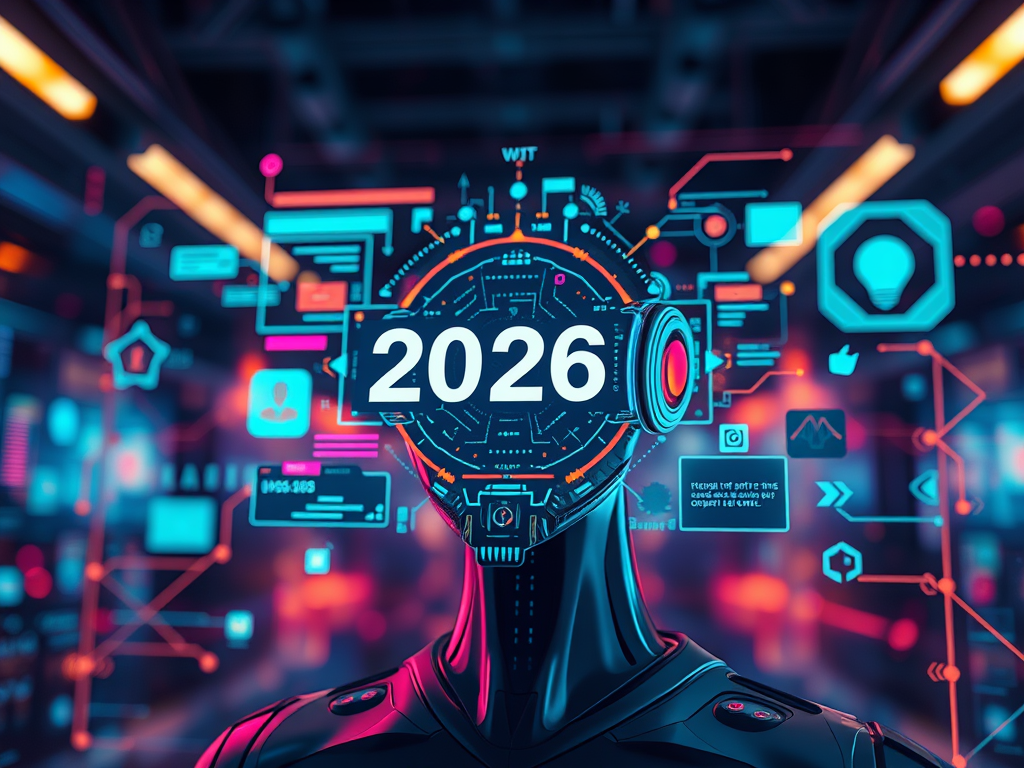
Have you ever talked to a chatbot, used a voice assistant, or received a product recommendation online? If yes, then you have already experienced Artificial Intelligence (AI) in action. But the truth is, most people still do not fully understand what AI is, how it works, or why it matters so much in today’s world. In 2026, Artificial Intelligence is no longer just a tech buzzword — it is a powerful force quietly shaping every part of our lives, from the apps we use to the jobs we do and the decisions companies make.
In this article, we will break down everything you need to know about Artificial Intelligence in 2026 — in simple language. Whether you are a student, a business owner, or just a curious reader, this guide is for you.
What Is Artificial Intelligence?
Artificial Intelligence, or AI, refers to the ability of machines and computer systems to perform tasks that normally require human intelligence. These tasks include understanding language, recognizing images, solving problems, making decisions, and even learning from experience.
Think of it this way: when you ask Siri or Google Assistant a question, the system does not just follow a fixed script. It understands your words, figures out the meaning, and gives you a relevant answer. That is AI at work.
Types of Artificial Intelligence
There are mainly three types of AI based on capability:
- Narrow AI (Weak AI): Designed for one specific task, like facial recognition or spam filtering. Most AI today falls in this category.
- General AI (Strong AI): A hypothetical AI that can perform any intellectual task a human can do. We are not there yet.
- Super AI: AI that surpasses human intelligence in every area. This remains theoretical for now.
How Does Artificial Intelligence Actually Work?
At its core, AI works by processing large amounts of data and finding patterns. It then uses those patterns to make predictions or decisions. The main technologies behind modern AI include:
- Machine Learning (ML): AI learns from data without being explicitly programmed. The more data it sees, the smarter it gets.
- Deep Learning: A subset of ML that uses neural networks (inspired by the human brain) to process complex data like images and audio.
- Natural Language Processing (NLP): Helps AI understand and generate human language. ChatGPT and Google Bard use NLP.
How Artificial Intelligence Is Transforming Industries in 2026
One of the most exciting things about AI is how broadly it is being applied. Let us look at how different sectors are being transformed.
1. Healthcare
AI is helping doctors diagnose diseases faster and more accurately. Tools powered by Artificial Intelligence can now analyze X-rays, MRI scans, and blood tests in seconds — tasks that would take human doctors much longer. AI is also being used to discover new drugs and personalize treatment plans for patients based on their unique genetic makeup.
2. Education
In 2026, AI-powered learning platforms are adapting to each student’s pace and style. Instead of one-size-fits-all teaching, these systems identify where a student is struggling and provide personalized exercises to help them improve. Teachers also use AI to grade assignments, saving hours of manual work.
3. Business and Marketing
Companies are using Artificial Intelligence to analyze customer behavior, predict trends, and create targeted marketing campaigns. AI chatbots handle thousands of customer service queries simultaneously, reducing costs while improving customer experience. Even content creation, financial forecasting, and supply chain management are being automated with AI.
4. Finance and Banking
Banks and financial institutions use AI to detect fraud in real time, assess loan eligibility, and manage investments. Robo-advisors powered by AI can now manage investment portfolios with minimal human intervention, making financial planning accessible to more people.
Top Artificial Intelligence Tools You Should Know in 2026
The AI tool landscape has exploded in recent years. Here are some of the most widely used and talked-about AI tools in 2026:
- ChatGPT (OpenAI): A conversational AI that can write, code, answer questions, and assist with research.
- Google Gemini: Google’s advanced AI model that integrates with search and productivity tools.
- Claude (Anthropic): Known for its safe, helpful, and honest responses across complex tasks.
- Midjourney & DALL-E: AI image generation tools that create stunning visuals from text prompts.
- GitHub Copilot: An AI coding assistant that helps developers write code faster and with fewer errors.
Will Artificial Intelligence Take Over Human Jobs?
This is one of the most debated questions of our time. The honest answer is: yes and no. AI will certainly automate repetitive, rule-based tasks — and that means some jobs will change or disappear. Data entry, basic customer support, and routine analysis are already being handled by AI systems.
However, AI is also creating entirely new job categories. AI prompt engineers, data scientists, machine learning specialists, and AI ethicists are in high demand. The key is to adapt and upskill. People who learn to work with AI rather than against it will have a major advantage in the job market.
Jobs that require empathy, creativity, critical thinking, and complex problem-solving are much harder for AI to replace. Fields like mental health counseling, creative arts, strategic leadership, and skilled trades will remain very human-centric for the foreseeable future.
Risks and Challenges of Artificial Intelligence
No technology is without its downsides. Artificial Intelligence brings serious challenges that we must address responsibly:
- Bias and Discrimination: AI systems trained on biased data can produce biased outputs, affecting hiring, lending, and law enforcement decisions unfairly.
- Privacy Concerns: AI-powered surveillance and data collection raise serious questions about individual privacy and freedom.
- Deepfakes and Misinformation: AI can generate highly convincing fake videos and content, posing threats to truth and public trust.
- Security Risks: Cybercriminals are using AI to launch more sophisticated attacks. Defending against AI-powered threats requires AI-powered defenses.
The Future of Artificial Intelligence: What to Expect
The pace of AI development is accelerating faster than ever. In the coming years, here is what experts believe we can expect:
- AI agents that can independently browse the web, write code, send emails, and complete multi-step tasks on your behalf.
- Multimodal AI models that can seamlessly switch between text, images, audio, and video in a single conversation.
- AI-assisted scientific research that could accelerate breakthroughs in medicine, climate science, and material discovery.
- Stronger AI regulation globally, with governments stepping in to set rules around transparency, safety, and accountability.
Conclusion
Artificial Intelligence is not a distant sci-fi fantasy anymore — it is here, it is powerful, and it is evolving rapidly. From transforming healthcare and education to reshaping business and entertainment, AI in 2026 is touching virtually every corner of human life.
The most important thing is to approach AI with both excitement and responsibility. Use it as a tool to enhance your capabilities, stay informed about its risks, and continue learning as the technology grows. Those who understand and embrace Artificial Intelligence today will be the ones leading tomorrow.
Frequently Asked Questions (FAQs)
Q1: What is Artificial Intelligence in simple words?
Artificial Intelligence is the ability of computers and machines to mimic human thinking — like understanding language, recognizing faces, or making decisions based on data.
Q2: Is AI dangerous?
AI itself is a tool — its danger depends on how it is used. Poorly regulated or misused AI can cause real harm (e.g., bias, privacy violations), but thoughtfully developed AI can solve major global problems.
Q3: Can I learn AI without a technical background?
Yes. Many platforms like Coursera, Google, and Microsoft offer beginner-friendly AI courses. You do not need to be a programmer to understand AI concepts and use AI tools effectively.
Q4: What industries will AI impact the most?
Healthcare, finance, education, retail, logistics, and manufacturing are among the sectors experiencing the most significant AI-driven transformation in 2026.
Q5: Is AI replacing humans?
AI is automating certain tasks, but it is also creating new opportunities. Rather than full replacement, most experts see AI and humans working together — with AI handling repetitive work and humans focusing on creativity, empathy, and judgment.