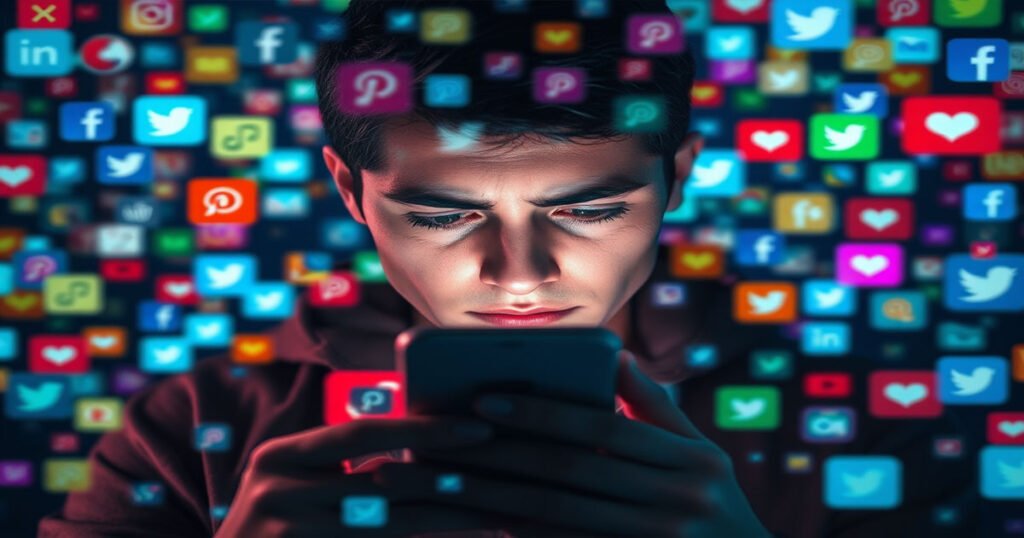
You wake up in the morning and the first thing you reach for is your phone. Before your eyes have fully adjusted to the light, you are already scrolling. Sound familiar? If so, you are not alone — and that is precisely the problem. Social media addiction and mental health are now so deeply intertwined that experts are calling it one of the most serious public health challenges of the 21st century. Moreover, unlike other addictions, this one is invisible, socially accepted, and actively encouraged by billion-dollar corporations whose entire business model depends on keeping you hooked.
Therefore, in this article, we will explore what social media addiction actually is, how it is silently damaging mental health on a global scale, who is most at risk, and — most importantly — what can actually be done about it.
What Is Social Media Addiction?
Social media addiction is not simply spending too much time online. It is a behavioral pattern in which a person compulsively uses social media platforms despite experiencing negative consequences in their personal, professional, or emotional life. Furthermore, it shares many of the same neurological characteristics as substance addiction — including dopamine-driven reward cycles, withdrawal symptoms, and increasing tolerance.
When you receive a like, a comment, or a new follower notification, your brain releases a small burst of dopamine — the same chemical associated with pleasure and reward. As a result, your brain begins to crave that feeling, pushing you to check your phone again and again. Over time, you need more stimulation to feel the same level of satisfaction. Consequently, what started as casual scrolling gradually becomes compulsive behavior.
How Big Is This Problem? The Numbers Are Alarming
The scale of social media addiction and mental health impact is staggering. Consider these facts:
- The average person spends approximately 6 hours and 37 minutes per day on screens, with a significant portion on social media platforms.
- Over 4.9 billion people worldwide actively use social media as of 2025.
- Studies show that heavy social media users are 3 times more likely to experience depression and anxiety compared to light users.
- In the United States, emergency room visits for self-harm among teenage girls increased by over 150% between 2010 and 2020 — directly coinciding with the rise of Instagram and Snapchat.
- Moreover, the World Health Organization now recognizes problematic internet use as a serious concern requiring clinical attention globally.
The Mental Health Effects of Social Media Addiction
1. Anxiety and Constant Comparison
One of the most damaging aspects of social media is the culture of comparison it creates. Every scroll exposes you to carefully curated highlights of other people lives — their vacations, achievements, relationships, and bodies. Therefore, your brain unconsciously begins measuring your own life against these filtered, edited, and often entirely unrealistic portrayals. As a result, feelings of inadequacy, low self-worth, and chronic anxiety become the norm rather than the exception.
2. Depression and Loneliness
It seems paradoxical that a tool designed to connect people is making them feel more isolated than ever. However, research consistently confirms this reality. Passive scrolling — consuming content without genuinely interacting — is strongly associated with increased feelings of loneliness and depression. Furthermore, the more time people spend on social media, the less time they typically spend in face-to-face interactions, which are essential for genuine emotional connection and mental wellbeing.
3. Sleep Disruption and Its Cascading Effects
The blue light emitted by phone screens suppresses melatonin production — the hormone responsible for regulating sleep. Moreover, the emotional stimulation of social media keeps the brain in a heightened state of alertness, making it significantly harder to wind down. Consequently, millions of people are going to bed later, sleeping less deeply, and waking up exhausted. Since sleep deprivation is itself a major risk factor for depression, anxiety, and cognitive decline, social media impact on sleep creates a vicious, self-reinforcing cycle.
4. Shortened Attention Span and Cognitive Decline
The constant rapid-fire consumption of short-form content — TikTok videos, Instagram Reels, Twitter threads — is fundamentally rewiring how the brain processes information. Furthermore, studies suggest that the average human attention span has shortened significantly over the past two decades, coinciding directly with the rise of social media. As a result, people are finding it increasingly difficult to concentrate, read deeply, or sustain focus on complex tasks.
5. Body Image Issues and Eating Disorders
For young women in particular, social media relentless promotion of unrealistic beauty standards has contributed directly to a surge in eating disorders, body dysmorphia, and cosmetic procedure requests. In addition, algorithm-driven platforms actively amplify body-related content because it generates high engagement — regardless of the psychological harm it causes to vulnerable users.
Who Is Most at Risk?
While social media addiction and mental health impacts affect people of all ages, certain groups are significantly more vulnerable.
- Teenagers and Young Adults (Ages 13-25): By far the most affected demographic. The adolescent brain is still developing — particularly the prefrontal cortex, which governs impulse control. Therefore, teenagers are neurologically less equipped to resist manipulative platform design.
- People with Pre-Existing Mental Health Conditions: Individuals with anxiety, depression, or low self-esteem are particularly susceptible. Moreover, social media often exacerbates these conditions rather than providing relief.
- Individuals in High-Pressure Environments: Students and professionals who use social media as an escape mechanism ultimately increase rather than reduce their stress levels.
Why Are Tech Companies Not Being Held Accountable?
This is the question that researchers, parents, and policymakers are increasingly and urgently asking. The answer is deeply uncomfortable. Social media platforms are designed by some of the world most talented engineers and psychologists specifically to maximize engagement — which is a polite term for addiction.
Features like infinite scroll, variable reward notifications, and algorithmic content curation are not accidents. They are deliberate design choices modeled on the same psychological principles used in casino slot machines. Furthermore, internal documents from major platforms have revealed that company executives were aware of the mental health harms their products were causing — particularly to teenagers — and chose profit over protection.
Nevertheless, there are encouraging signs of change. Australia passed landmark legislation in 2024 banning children under 16 from social media entirely. However, meaningful global regulation remains frustratingly slow given the scale and urgency of the problem.
Practical Solutions: How to Break the Cycle
The good news is that social media addiction and mental health damage are both preventable and reversible. Therefore, here are evidence-based strategies that actually work.
Set Hard Time Limits
Use your phone built-in screen time tools to set strict daily limits on social media apps. Research shows that reducing social media use to 30 minutes per day can significantly reduce loneliness and depression within just three weeks.
Create Phone-Free Zones
Designate specific spaces — particularly the bedroom and the dinner table — as completely phone-free. Furthermore, keeping your phone out of the bedroom is one of the single most effective changes you can make for both sleep quality and mental health.
Conduct a Regular Digital Detox
Set aside one day per week to completely disconnect from all social media. Consequently, you give your brain the rest it needs and reconnect with activities that provide genuine fulfillment.
Curate Your Feed Ruthlessly
Unfollow or mute any account that makes you feel inadequate, anxious, or unhappy. In addition, actively seek out content that is genuinely informative, uplifting, or creative. The algorithm will adapt to your choices over time.
Replace Scrolling with Intentional Activities
The most effective way to reduce social media use is to fill that time with something more rewarding — exercise, reading, cooking, a hobby, or spending time with people you care about. Moreover, these activities build genuine self-esteem that no amount of likes can replicate.
Conclusion
Social media addiction and mental health have become one of the defining challenges of our generation. Therefore, ignoring this crisis is no longer an option — for individuals, for parents, for schools, and for governments. The platforms profiting from our attention have shown limited willingness to prioritize user wellbeing over engagement metrics. Consequently, the responsibility falls on each of us to use these tools consciously and protectively.
Moreover, awareness is the first and most powerful step. Simply recognizing that these platforms are engineered to be addictive — and that your mental health is worth more than any notification — is transformative. As a result, small, intentional changes in how you use social media can produce profound improvements in your anxiety, sleep, relationships, and overall sense of self-worth. The crisis is real. But so is your ability to take back control.
Frequently Asked Questions (FAQs)
Q1: How do I know if I am addicted to social media?
Key warning signs include feeling anxious when you cannot access social media, checking your phone compulsively in social situations, losing track of time while scrolling, using social media to escape negative emotions, and feeling worse about yourself after using it rather than better.
Q2: Can social media addiction cause clinical depression?
Research strongly suggests that heavy social media use is associated with significantly higher rates of depression. However, the relationship is bidirectional — people who are already depressed may use social media more, and heavy use may worsen or trigger depressive symptoms in vulnerable individuals.
Q3: At what age does social media become harmful for children?
Most child development experts recommend that children under 13 should not use social media at all, and that teenagers should have carefully monitored, limited access. Furthermore, the adolescent brain is particularly vulnerable to social media manipulative design features.
Q4: Does a digital detox actually work?
Yes. Multiple studies confirm that even short periods of reduced social media use — as little as one week — produce measurable improvements in mood, sleep quality, focus, and overall life satisfaction. Moreover, the benefits compound over time with continued intentional use.
Q5: What is the most addictive social media platform?
Research consistently identifies short-form video platforms — particularly TikTok and Instagram Reels — as the most addictive, due to their algorithmically optimized infinite scroll and unpredictable reward system. Furthermore, their design specifically exploits the brain natural pattern-recognition tendencies.