
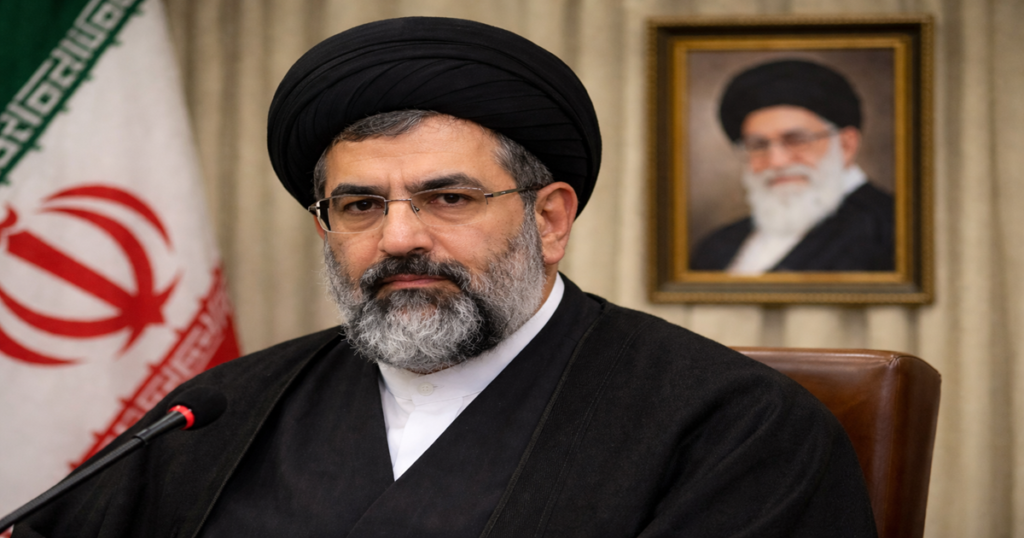
For thirty-seven years, one man held absolute power in the Islamic Republic of Iran. On February 28, Ayatollah Ali Khamenei was killed in the opening airstrikes of Operation Epic Fury — the US-Israel campaign launched against Iran. His death left a power vacuum at the top of one of the most consequential governments in the world, in the middle of an active war. Moreover, the question of who would replace him carried enormous stakes — not just for Iran’s 90 million people, but for the fate of the Strait of Hormuz, the global oil market, and the entire Middle East conflict.
Furthermore, on March 8, Iran’s Assembly of Experts announced its answer: Mojtaba Khamenei, the 56-year-old second son of the late supreme leader. The appointment shocked many — including members of the Assembly itself. As a result, a man who had spent decades wielding vast power entirely from the shadows, never holding elected office, never addressing the public, and never appearing in a single press conference, suddenly became the Islamic Republic’s third supreme leader and the most powerful figure in a nation at war.
Who Is Mojtaba Khamenei? A Profile of Iran’s New Leader
Early Life and Background
Mojtaba Khamenei was born in 1969 in Mashhad — the holiest city in Iran and the second holiest in Shia Islam. He was ten years old when his father joined Ayatollah Khomeini in overthrowing the Shah and establishing the Islamic Republic in 1979. Moreover, the family moved to Tehran after the revolution, as the elder Khamenei rose through government positions — serving as deputy defence minister, then as president for two terms, and finally as supreme leader from 1989 onward. Furthermore, Mojtaba graduated from the elite Alavi High School and subsequently joined the Islamic Revolutionary Guard Corps during the final years of the devastating Iran-Iraq War, which ended in 1988. As a result, he built his formative relationships not in seminaries or parliament, but in the IRGC — the organisation that now controls Iran’s military, intelligence, and significant portions of its economy.
Religious Rank: A Significant Controversy
Mojtaba Khamenei holds the clerical rank of hojatoleslam — a mid-level clerical title that sits below the rank of ayatollah. This is constitutionally and theologically significant. Under Iran’s governing framework, the supreme leader is expected to be a source of emulation — a senior clerical authority whose religious rulings carry binding weight for millions of Shia Muslims. Moreover, his father was not an ayatollah when he became supreme leader in 1989 — the law was amended to accommodate him, and he was subsequently elevated in rank. Furthermore, the same legal accommodation may be arranged for Mojtaba. However, many within Iran’s clerical establishment regard the arrangement as a compromise of religious legitimacy. As a result, Mojtaba Khamenei begins his tenure with a credibility deficit within the very clerical system whose authority he now claims to represent.
The Shadow Operator: Decades of Behind-the-Scenes Power
Despite his public invisibility, Mojtaba Khamenei has been one of Iran’s most consequential political operators for at least two decades. He never ran for office. He never gave public speeches. He almost never appeared in photographs. Yet his influence shaped Iran’s domestic politics at critical junctures. Moreover, US Treasury Department sanctions imposed on him in 2019 stated that his father had “delegated a part of his leadership responsibilities to his son” — specifically that Mojtaba worked closely with the IRGC commander and the Basij Resistance Force to “advance his father’s destabilising regional ambitions and oppressive domestic objectives.” Furthermore, Al Jazeera confirmed that he cultivated deep ties to the IRGC from his years of service, with several of his wartime comrades rising to lead key positions in Iran’s security and intelligence apparatus. As a result, Mojtaba Khamenei enters the supreme leadership not as a newcomer to power, but as a man who has been exercising it informally for years.
The 2005 and 2009 Elections: Manufacturing Outcomes
Two presidential elections in particular brought Mojtaba Khamenei into international focus — both involving the controversial Mahmoud Ahmadinejad. In 2005, reformist politicians accused Mojtaba of working with senior clerics and IRGC commanders to engineer Ahmadinejad’s surprise victory over established candidates. Moreover, in 2009, Ahmadinejad’s disputed reelection triggered the largest protests Iran had seen since the revolution — the Green Movement. Millions took to the streets to challenge the result. Furthermore, one of the reformist candidates at the time, Mahdi Karroubi, wrote a formal letter to the elder Khamenei accusing his son of manipulating the outcome. The elder Khamenei’s reported response was revealing: “He is his own man, not just my son.” As a result, the 2009 protest chants included a phrase that now carries a different meaning: “Wish you death, Mojtaba, so you would never be the next leader.”
How the Appointment Happened: Pressure, Speed, and Opposition
The process that produced Mojtaba Khamenei as supreme leader was deeply contested — and its circumstances have generated lasting questions about the legitimacy of the appointment.
| Date | Event |
| Feb 28, 2026 | Ali Khamenei killed in Operation Epic Fury airstrikes on Tehran |
| March 3 | Media reports identify Mojtaba as front-runner; formal announcement pending due to war |
| March 3 (early) | IRGC commanders begin pressuring Assembly of Experts members to vote for Mojtaba — “repeated contacts and psychological and political pressure” (Iran International) |
| March 3 (online session) | First electoral session held online; members described atmosphere as “unnatural”; opponents given limited time to speak; discussion cut off before vote held |
| March 3 (after vote) | US and Israeli bombs hit the Assembly of Experts office in Qom after votes cast but before count completed |
| March 6 | Parliament member Mohsen Zanganeh states two candidates remain; both “reluctant to accept the position” |
| March 6 | Expediency Discernment Council reportedly moved to suspend Assembly and shift authority — suggesting leadership crisis behind the scenes |
| March 8 | Assembly of Experts formally announces Mojtaba Khamenei as Iran’s third Supreme Leader |
| March 9 | Public rallies held in Tehran with Mojtaba’s portrait displayed — state-organised shows of support |
| March 11 | IRGC commanders’ funerals held at Enghelab Square — Mojtaba’s portrait displayed on giant screen |
| March 12 | First statement attributed to Mojtaba read on state television — no video or photo released |
Wikipedia’s detailed account of the election confirmed that IRGC pressure on Assembly members was intense, debate was deliberately curtailed, and strong opposition existed among some members who believed the appointment was inappropriate during an active war. Moreover, conservative commentator Mohammad Mohajeri stated publicly that appointing a leader during wartime “could be divisive and should be avoided.” Furthermore, journalist Behrouz Turani reported that the Expediency Discernment Council had moved to suspend the Assembly entirely — suggesting that the clerical body was struggling to reach a decision it could stand behind. As a result, the appointment carries a legitimacy question that will shadow Mojtaba Khamenei throughout his tenure.
His First Statement: What Mojtaba Khamenei Told the World
On March 12 — four days after his appointment — Iran’s state television broadcast a statement attributed to the new supreme leader. Notably, it was read aloud by a news anchor. No video of Mojtaba speaking appeared. No photograph accompanied the broadcast. The Islamic Republic’s new leader has yet to appear in public since assuming power.
Nevertheless, the substance of the statement was unambiguous. Al Jazeera, Axios, and the Times of Israel all confirmed its key elements:
- Vengeance: Mojtaba stated Iran would not forgo avenging the deaths caused by US and Israeli strikes. “Every citizen killed by the enemy is a case for vengeance in itself,” the statement said.
- Strait of Hormuz: He explicitly described the strait as a “lever” and stated Iran would continue using it to pressure its enemies. The IRGC subsequently announced it would keep the strait shut in keeping with his orders.
- US Military Bases: Mojtaba demanded all US military bases in the Gulf region be closed immediately, warning that any that remain open will continue to be struck by Iranian forces.
- New Fronts: He stated Iran was “looking at opening new fronts in the war where the enemy has little experience and is highly vulnerable” — language that analysts interpreted as foreshadowing expanded Houthi operations in Yemen and increased proxy activity in Iraq.
- Axis of Resistance: He explicitly thanked Hezbollah, the Houthis, and Iraqi militias for their support, calling them “our best friends” and describing cooperation between Iran and its allies as inseparable from the Islamic Revolution’s values.
- Post-War Compensation: Mojtaba stated that after the war concludes, Iran will demand that the US and Israel pay financial compensation for the damage caused.
How He Differs From His Father — And Why Analysts Say He Is More Dangerous
Multiple analysts and former diplomats have described Mojtaba Khamenei as more hardline and more dangerous than his father. Moreover, CNBC quoted Michael Herzog, former Israeli Ambassador to the United States, as saying: “The Iranians are showing defiance by choosing the son of Khamenei.” Understanding what makes Mojtaba distinct requires comparing him to his predecessor.
| Dimension | Ali Khamenei (Father) | Mojtaba Khamenei (Son) |
| Clerical rank | Elevated to Grand Ayatollah post-appointment | Hojatoleslam — mid-level; elevation pending |
| IRGC relationship | Cultivated IRGC as political instrument | Personally embedded in IRGC since 1980s — organic relationship |
| Public presence | Regular speeches, Friday prayers, state appearances | Near-total invisibility — no public appearance since appointment |
| Political style | Managed factions, balanced competing interests | Hardliner — crushed dissent, engineered election outcomes |
| Experience with war | Led Iran through 1980s Iran-Iraq War and proxy conflicts | No direct experience commanding in active major war — first real test is now |
| Diplomatic balance | Occasionally permitted diplomatic openings (JCPOA 2015) | First statement signals no interest in negotiation |
| Personal motivation | Ideological — revolutionary generation | Personal — father, mother, wife, sister killed in Feb 28 strikes |
| International sanctions | Sanctioned under multiple regimes | Personally sanctioned by US since 2019 |
| Legitimacy within clergy | Broad clerical acceptance over decades | Contested — appointment opposed by some Assembly members |
The personal dimension of Mojtaba Khamenei’s motivation deserves particular attention. His father, mother, wife, and sister were all killed in the February 28 strikes. He was reportedly not present in the compound when it was hit — Israeli officials told Axios he was there but survived wounded, while other reports suggest he was not present. Regardless, the personal loss is extraordinary. Moreover, Rob Geist Pinfold, a lecturer in international security at King’s College London, told Al Jazeera that Mojtaba’s first statement represented “more of the same” rather than the change in rhetoric Trump had hoped for. Furthermore, Al Jazeera analyst Zeidon Alkinani noted that Khamenei’s focus on armed resistance allowed him to avoid “discussions over economic reform, state building and many other fundamental issues that matter to ordinary Iranians.” As a result, analysts broadly see Mojtaba as a figure who will prosecute the war aggressively and resist diplomatic openings — at least in the short term.
The Legitimacy Problem: Dynasty, Dissent, and Division
Beyond the question of religious rank, Mojtaba Khamenei faces a deeper legitimacy challenge: the appointment creates something that Iran’s founding ideology explicitly rejected — a ruling family. The 1979 revolution overthrew the Pahlavi dynasty and established a system theoretically governed by clerical merit and divine guidance. A son succeeding his father as supreme leader echoes precisely the dynastic pattern the revolution was supposed to eliminate.
Moreover, the elder Khamenei himself reportedly told the Assembly of Experts in 2024 that his son should be excluded from succession consideration — a position reported by the New York Times. Furthermore, a 2024 Assembly meeting to discuss succession was reportedly influenced by the elder Khamenei signalling preference for other candidates. As a result, Mojtaba’s appointment contradicts his own father’s stated wishes — an irony that has not been lost on Iranian observers. Iranian society, Al Jazeera reported, “remains divided over Mojtaba Khamenei’s appointment despite his call for unity, mainly due to the same economic hardships that fuelled violent protests in December and January.”
Financial Empire and Corruption Allegations
Mojtaba Khamenei’s personal wealth has been another source of controversy. Al Jazeera confirmed that he “has also amassed an economic empire involving assets in multiple countries” — spanning the Middle East and Europe. Moreover, Bloomberg linked him to Ali Ansari — a banker whose Bank Ayandeh was forcibly dissolved by the Iranian state in 2025 after going bankrupt through insider lending. The dissolution of Bank Ayandeh worsened Iran’s already extreme inflation and required public funds to partially cover losses. Furthermore, CNBC confirmed that Mojtaba owns a property empire worth hundreds of millions, with his name reportedly not appearing directly in transaction records — instead routed through a network of insiders and associates linked to the Iranian establishment. As a result, the man now leading a nation in economic crisis carries personal allegations of having enriched himself at his people’s expense.
Trump’s Reaction and the Conflict With Pezeshkian
The appointment created an immediate and visible tension between Iran’s two most powerful figures. Iranian President Masoud Pezeshkian had, on Wednesday March 11, suggested that Iran would consider ending the war if certain conditions were met — a signal interpreted as a potential diplomatic opening. The very next day, Mojtaba Khamenei’s first statement as supreme leader took the opposite position entirely: no negotiations, no retreat, continued Hormuz closure, new fronts opening. Moreover, Al Jazeera’s Tehran correspondent confirmed this “creates a lot of uncertainty about the legitimacy and the ability of the supreme leader to stand strong in the face of major challenges.” Furthermore, Trump reacted to the appointment by telling Fox News: “I don’t believe he can live in peace.” As a result, the appointment has sharpened the war’s trajectory rather than opening any path toward resolution.
Conclusion
Mojtaba Khamenei is unlike any supreme leader Iran has had. He is younger than his father was at appointment, more deeply embedded in the IRGC’s operational culture, untested in public leadership, contested in his religious credentials, personally bereaved by the war that brought him to power, and facing an Iran that is simultaneously bombed, isolated, economically broken, and defiant. Moreover, his first statement made his immediate intentions clear: vengeance, continued Hormuz closure, expanded proxy operations, and no diplomatic concessions.
Furthermore, the manner of his appointment — rushed, pressured, and opposed within the Assembly — means he begins with a legitimacy deficit that his father never faced. Whether he can consolidate power, manage Iran’s fractured political establishment, and navigate a war that has already killed his family remains entirely uncertain. As a result, Mojtaba Khamenei is the most consequential and least understood new leader anywhere in the world. What he does next will shape the Middle East, the global energy market, and the nuclear non-proliferation order for years to come.
Frequently Asked Questions (FAQs)
Q1: Who is Mojtaba Khamenei and how did he become Supreme Leader?
Mojtaba Khamenei is the 56-year-old second son of Iran’s late Supreme Leader Ayatollah Ali Khamenei, who was killed in US-Israeli airstrikes on February 28. Moreover, Iran’s Assembly of Experts — the 88-member clerical body tasked with selecting the supreme leader — voted to appoint him on March 8 after a contested process marked by IRGC pressure on members, curtailed debate, and reported internal opposition. Furthermore, Mojtaba had never held elected office but had wielded extensive behind-the-scenes power for decades through his ties to the IRGC and the Basij. As a result, he became Iran’s third supreme leader in the middle of an active war.
Q2: What did Mojtaba Khamenei say in his first statement?
His first statement, read on Iranian state television on March 12, contained five main points: Iran will avenge every Iranian killed by US and Israeli strikes; the Strait of Hormuz will remain closed as leverage against enemies; all US military bases in the Gulf region must close or face continued strikes; Iran will open new fronts where the US and Israel are most vulnerable; and after the war, Iran will demand financial compensation from the US and Israel. Moreover, he thanked Hezbollah, the Houthis, and Iraqi militias for their support. Notably, no video or photo of Mojtaba accompanied the broadcast — he has not yet appeared in public.
Q3: Is Mojtaba Khamenei more hardline than his father?
Most analysts say yes. CNBC quoted former Israeli Ambassador Michael Herzog describing the appointment as Iran “showing defiance.” Moreover, Mojtaba’s entire career has been built around the IRGC, the Basij, and the hardline security apparatus — he is believed to have engineered Ahmadinejad’s elections in 2005 and 2009 and suppressed the Green Movement protests. Furthermore, his first statement contained no diplomatic language whatsoever — in direct contrast to President Pezeshkian’s suggestion of possible peace talks. As a result, multiple analysts assess him as less likely to permit diplomatic openings than his father.
Q4: Is Mojtaba Khamenei’s appointment legally and religiously legitimate?
This is contested. Constitutionally, the Assembly of Experts holds the authority to appoint the supreme leader — and it did so. However, the process was described by participants as rushed and conducted under IRGC pressure with limited debate. Moreover, Mojtaba holds the rank of hojatoleslam — not ayatollah — which falls below the traditional expectation for a supreme leader. Furthermore, the elder Khamenei himself reportedly told the Assembly in 2024 that his son should be excluded from consideration. As a result, the appointment is legally executed but carries significant internal contestation.
Q5: How did global markets react to Mojtaba Khamenei’s appointment?
Markets reacted with immediate alarm. CNBC confirmed that oil prices jumped to $120 per barrel on Monday following the appointment news — their highest level since 2022. Moreover, the combination of the appointment and Iran’s continued Strait of Hormuz closure sent energy markets into fresh turmoil. Furthermore, Trump’s public statement that he did not believe the new leader “can live in peace” signalled that no diplomatic de-escalation was expected from the US side. As a result, financial markets interpreted the appointment as extending and intensifying the conflict rather than creating any path toward resolution.
Pingback: Iran War Week 4: Trump Talks Peace While Bombs Keep Falling - instagesic.com