
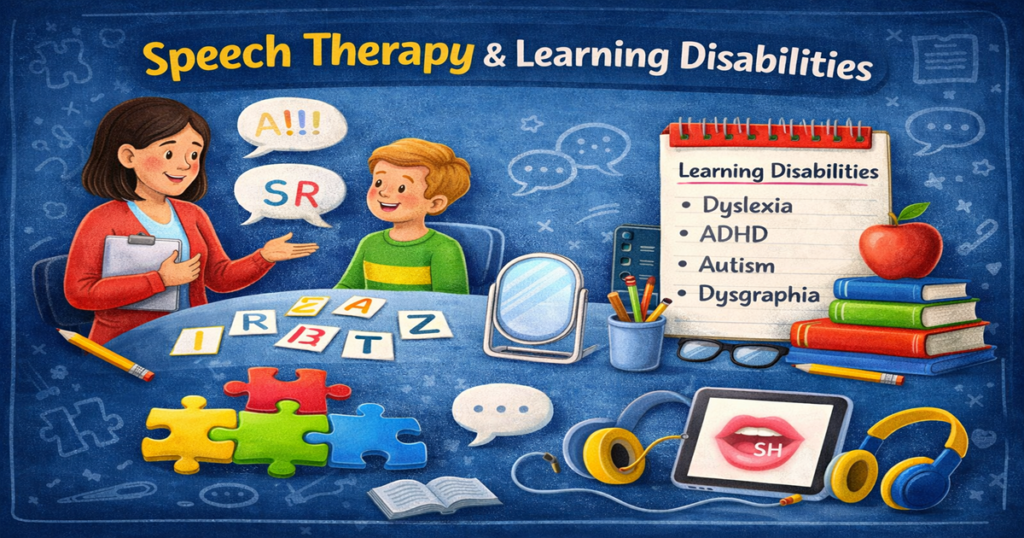
Speech therapy and learning disabilities are among the most significant and frequently misunderstood areas of child development, education, and healthcare. Communication disorders affect approximately 40 million Americans — roughly 12% of the entire US population — making them among the most prevalent disabilities in the country. In the United Kingdom, NHS England data from February 2024 revealed that 72,661 children were on waiting lists for speech and language therapy, with more than 23,000 waiting up to a year for support they urgently need. These are not marginal statistics: they describe a public health and educational challenge of enormous scale.
Moreover, the relationship between speech therapy and learning disabilities is deeply intertwined. Children with speech sound disorders are more likely to experience reading difficulties. Children with dyslexia frequently have underlying language processing challenges that speech and language therapists are uniquely equipped to address. Children with ADHD, dyspraxia, autism spectrum conditions, and developmental language disorder often need coordinated, multi-disciplinary support that places speech-language therapy at its centre. Understanding how these conditions connect, what the evidence says about effective intervention, and what support systems exist in the UK and USA is essential for parents, educators, and healthcare professionals alike.
This guide covers what speech therapy is, the range of communication disorders it addresses, the most common learning disabilities and how they are identified, the evidence for early intervention, the role of technology in transforming both fields, and the specific support frameworks available to families in the UK and USA in 2026.
What Is Speech Therapy?
Speech therapy — more precisely known as speech-language therapy or speech-language pathology — is a clinical discipline concerned with the assessment, diagnosis, and treatment of communication disorders, language delays, voice disorders, fluency problems such as stuttering, and swallowing difficulties. Professionals who deliver this care are called speech-language pathologists (SLPs) in the United States or speech and language therapists (SLTs) in the United Kingdom. Both titles describe highly qualified clinicians — in the US, the role requires a master’s degree and licensure; in the UK, a degree accredited by the Royal College of Speech and Language Therapists.
The scope of speech therapy is broader than most people realise. SLPs and SLTs work with premature newborns learning to feed, toddlers with delayed language development, school-age children with speech sound disorders or reading difficulties, teenagers who stutter, adults recovering communication and swallowing function after stroke or brain injury, and elderly patients managing the speech and language consequences of Parkinson’s disease or dementia. Furthermore, the American Speech-Language-Hearing Association has approximately 234,000 members — reflecting both the scale of need and the professional infrastructure that exists to meet it.
In educational settings, SLPs form one of the most important specialist roles in inclusive schooling. The Individuals with Disabilities Education Act in the USA designates speech or language impairments as the second most common disability category in special education, representing approximately 19% of all students receiving special education services. The education system employs the majority of SLPs in the United States. However, demand significantly outpaces supply: approximately 48% of US school districts report difficulty filling SLP positions, with shortages most acute in rural and economically disadvantaged communities.
Key Statistics: Speech Therapy and Learning Disabilities in 2026
| Metric | Figure | Source |
| Americans with communication disorders | 40 million (12% of population) | NIDCD / Beaming Health 2026 |
| US children (3-17) with comm. disorders | 7.7% (nearly 1 in 12) | NIDCD 2024 |
| UK children on NHS SLT waiting lists | 72,661 (23,387 waiting up to 1 year) | NHS England, Feb 2024 |
| Speech sound disorders — school children | 3.4-3.8% (about 1 per classroom) | PMC / Wiley 2026 |
| Speech therapy success — speech sound disorders | 70-90% resolved by school age | Gitnux 2026 / Beaming Health |
| Stuttering — early intervention recovery rate | 75-80% (preschool children) | Beaming Health 2026 |
| US school districts unable to fill SLP roles | 48% | US Dept of Education |
| SLPs working in education settings (US) | Majority (approx. 61%) | ASHA / Beaming Health |
| Global learning disabilities undiagnosed | 2 in 5 (40%) go undetected | Crown Counseling 2025 |
| Americans with learning & attention issues | 65.6 million (1 in 5) | Crown Counseling 2025 |
| Dyslexia prevalence worldwide | 1 in 10 people | NHS / BDA |
| ADHD — global child prevalence | 5-7% of all children | WHO / Multiple studies |
| UK SpLD pupils reaching expected KS2 standard | 21% (vs 74% for non-SEND peers) | House of Commons Library 2026 |
| Speech therapy app market value | $3.2 billion (9.8% annual growth) | Beaming Health 2026 |
Common Communication Disorders Addressed by Speech Therapy
Speech Sound Disorders
Speech sound disorders (SSDs) are the most common reason children are referred for speech-language therapy. The term covers difficulties in producing or perceiving speech sounds correctly — including substituting one sound for another, omitting sounds, or distorting sounds in ways that make speech difficult to understand. Research published in the International Journal of Language and Communication Disorders in 2026 confirmed that SSDs affect approximately 3.4 to 3.8 percent of school-aged children — meaning that in a typical classroom of 30 pupils, at least one child will need clinical support.
The evidence for intervention is strong. Speech therapy resolves 80 to 90 percent of speech sound disorders by school age when delivered at sufficient intensity. However, the same 2026 research highlights a critical access problem in the UK: most NHS SLTs reported being able to elicit only around 30 practice trials per session across 9 to 12 sessions — significantly below the 50 to 100 trials across 30 sessions that research indicates is required for effective treatment. Furthermore, children with persistent SSDs after age 8 are likely to underperform academically as late as 14 years old — confirming that delays in accessing therapy carry real and lasting educational costs.
Developmental Language Disorder
Developmental language disorder (DLD) is a lifelong condition in which children experience persistent difficulties understanding and using spoken language — without any obvious cause such as hearing loss, intellectual disability, or neurological damage. DLD affects approximately 7 to 10 percent of children and is one of the most common neurodevelopmental conditions, yet it remains poorly understood by the general public and frequently unidentified in schools. Boys face a 2.4 times higher risk of developmental language disorder than girls.
DLD has significant academic consequences. Children with DLD struggle to follow classroom instructions, participate in group discussions, access written language, and demonstrate their knowledge in assessments. Moreover, research consistently shows that DLD frequently co-occurs with dyslexia, ADHD, and social communication difficulties — creating complex profiles that require multi-disciplinary assessment and support. Furthermore, DLD is a lifelong condition: it does not simply resolve with age, and many young people with DLD continue to need tailored support throughout secondary school and into adulthood.
Stuttering and Fluency Disorders
Stuttering — characterised by repetitions, prolongations, or blocks in speech — affects approximately one percent of the global adult population and around five percent of children at some point in their development. Most children who begin to stutter between ages two and five recover naturally, but approximately 25 percent go on to persistent stuttering that requires therapeutic support. Early intervention using evidence-based approaches such as the Lidcombe Program achieves recovery rates of 75 to 80 percent for preschool children. In adults, fluency shaping techniques reduce stuttering severity by approximately 70 percent. Males are two to three times more likely than females to stutter persistently into adulthood.
Voice Disorders and Selective Mutism
Voice disorders — including nodules, polyps, muscle tension dysphonia, and vocal fold paralysis — are addressed through both behavioural voice therapy and, where necessary, surgical intervention. Group therapy for voice disorders reduces vocal nodules in approximately 65 percent of cases. Selective mutism — a condition in which a child can speak normally in some environments but is unable to speak in others, most commonly school — is treated primarily through behavioural therapy, achieving remission in 70 to 90 percent of cases when evidence-based approaches are applied consistently and early.
Learning Disabilities: Types, Prevalence, and Identification
Learning disabilities — also called specific learning difficulties (SpLD) in the UK — are neurologically based conditions that affect the way the brain processes information. They are not indicative of low intelligence. A child with dyslexia may be highly creative and analytically gifted. A teenager with dyscalculia may excel in language and the arts. Learning disabilities describe differences in how the brain processes specific types of information — differences that, with appropriate support, need not limit a person’s potential. However, without identification and support, learning disabilities create significant barriers to academic achievement, self-esteem, and long-term life outcomes. As of 2025, an estimated two in five learning disabilities worldwide go undiagnosed — a striking figure given how transformative early identification and intervention can be.
Dyslexia
Dyslexia is the most prevalent specific learning difficulty, affecting approximately one in ten people worldwide — making it one of the most common learning differences in both the UK and USA. Dyslexia primarily affects reading, spelling, and phonological processing — the ability to perceive and manipulate the sound structure of language. It is not a vision problem, and it is not caused by poor teaching. Dyslexia has a strong genetic component, often running in families, and affects people of all intelligence levels equally.
In the UK, dyslexia falls under the umbrella of Specific Learning Difficulties (SpLD) in the SEND Code of Practice, alongside dyspraxia, dyscalculia, and ADHD. The House of Commons Library’s 2026 research brief confirmed the scale of the attainment gap: only 21 percent of pupils with a primary SEND need of SpLD reached the expected standard across English reading, writing, and mathematics at the end of primary school, compared to 74 percent of pupils without identified SEND. Furthermore, at GCSE level, only 3 percent of SpLD pupils achieved a standard pass in both English and maths, compared to 72.3 percent of their non-SEND peers. These figures represent an urgent policy and educational challenge. The UK government established a neurodivergence taskforce in 2025 and commissioned University College London to review the most effective tools and strategies for supporting neurodivergent children in mainstream schools.
In the USA, the National Center for Education Statistics confirms that specific learning disabilities — the majority of which are dyslexia-related — are the single most common disability category in special education, accounting for more students than any other condition including speech or language impairments. Phonological awareness training delivered early prevents reading difficulties in approximately 60 percent of at-risk children — making it one of the highest-impact preventative educational interventions available.
ADHD — Attention Deficit Hyperactivity Disorder
ADHD affects an estimated 5 to 7 percent of all children globally and is characterised by persistent patterns of inattention, hyperactivity, and impulsivity that significantly impair functioning across multiple settings. It is one of the four broad areas of SEND as defined in the UK SEND Code of Practice, classified as a social, emotional, and mental health (SEMH) need. In the UK, assessment and ongoing support for ADHD is coordinated through the Child and Adolescent Mental Health Service (CAMHS), though waiting times are substantial in most areas.
ADHD frequently co-occurs with dyslexia, developmental language disorder, and dyspraxia — creating layered and complex learning profiles that require comprehensive assessment and multi-disciplinary support. Moreover, boys are diagnosed with ADHD significantly more frequently than girls — a disparity that researchers increasingly attribute partly to genuine sex differences in presentation and partly to diagnostic bias, with girls’ ADHD symptoms more often presenting as inattentiveness and internalised struggle rather than the hyperactivity more readily identified in clinical settings.
Dyspraxia — Developmental Coordination Disorder
Dyspraxia — formally known as Developmental Coordination Disorder (DCD) — is a condition affecting physical coordination, balance, fine motor skills, and spatial awareness. It affects approximately 5 to 6 percent of school-age children and causes significant difficulties with handwriting, physical education, organisation, and multi-step instructions. Dyspraxia does not affect intelligence, but its impact on classroom performance — particularly written work and organisation — can substantially impair academic outcomes without appropriate support and accommodation.
In the UK, dyspraxia is classified as a specific learning difficulty under the SpLD umbrella. Support typically involves occupational therapy for motor skill development and strategies for organisation, alongside accommodations such as word processing technology, extra time in examinations, and structured task-breaking techniques. Speech and language therapy may also be involved where DCD co-occurs with language or communication difficulties, which is common.
Dyscalculia, Dysgraphia, and Other SpLDs
Dyscalculia is a specific learning difficulty affecting numerical processing and mathematical reasoning, estimated to affect approximately 3 to 6 percent of the population. Like dyslexia in reading, dyscalculia is not related to general intelligence and responds well to targeted, evidence-based mathematical intervention when identified early. Dysgraphia affects written expression and handwriting, creating difficulties with letter formation, spelling, and organising thoughts on paper. Both conditions frequently go undiagnosed, contributing to the global figure that 40 percent of learning disabilities remain undetected.
| Learning Disability | Prevalence | Primary Challenges | Key UK/USA Support |
| Dyslexia | 1 in 10 globally | Reading, spelling, phonological processing | SEND Code of Practice, SpLD support, EHCP |
| ADHD | 5-7% of children | Attention, impulsivity, organisation | CAMHS (UK), IEP/504 plans (USA) |
| Dyspraxia (DCD) | 5-6% of school-age children | Motor coordination, handwriting, organisation | OT, extra time, assistive tech |
| Developmental Language Disorder | 7-10% of children | Understanding and using spoken language | SLT, school SENCO, EHCP |
| Dyscalculia | 3-6% of population | Numerical reasoning, maths processing | Specialist maths intervention |
| Dysgraphia | Estimated 7-15% of school children | Writing, letter formation, written expression | OT, word processing, accommodations |
| Autism Spectrum Condition | 1-2% of population | Social communication, sensory processing | Multi-disciplinary team, EHCP, IEP |
The Critical Importance of Early Intervention
Early intervention is the single most evidence-supported principle in both speech therapy and learning disability support. Research consistently shows that identifying and treating communication disorders and learning difficulties before age five — and ideally before age three for speech and language concerns — produces substantially better outcomes than later intervention. Furthermore, the neuroplasticity of the developing brain means that early therapeutic input can redirect developmental trajectories in ways that become increasingly difficult as children grow older.
Approximately 70 percent of preschool children with language delays show significant improvement following speech-language therapy, with outcomes significantly boosted by active parent involvement in the therapeutic process. For children with speech sound disorders, early intervention resolves the condition in the vast majority of cases before school age — whereas children with persistent SSDs after age 8 face measurable academic underperformance into secondary school. Moreover, phonological awareness training in the early years prevents reading difficulties in approximately 60 percent of at-risk children — a preventative gain that is both educationally and economically significant.
The barriers to early intervention, however, are substantial and well-documented. In the UK, NHS waiting lists for speech and language therapy reach into the tens of thousands, with many children waiting up to a year for initial assessment. A 2026 systematic review in the International Journal of Language and Communication Disorders explicitly acknowledged that access to direct SLT services can be challenging, leaving many children with no timely support during key periods of their primary education. In the USA, the 48 percent of school districts that report difficulty filling SLP positions face similar access constraints — with rural and low-income communities consistently most disadvantaged.
Speech Therapy in Practice: Approaches and Techniques
Modern speech-language therapy draws on a rich and diverse evidence base. Treatment is always individually tailored — there is no single approach that works for all communication disorders or all children. However, several well-validated therapeutic frameworks guide practice across both the UK and USA.
- Phonological awareness training: Building the ability to identify and manipulate the sound units of language — the foundation of both speech sound production and reading development. Highly effective for children with speech sound disorders and those at risk of dyslexia.
- The Lidcombe Program: A structured, parent-delivered early intervention for stuttering in young children, with a 75-80% recovery rate in preschool-aged children who stutter.
- PROMPT (Prompts for Restructuring Oral Muscular Phonetic Targets): A tactile-kinaesthetic approach that uses physical prompts to guide correct mouth positioning for speech sounds. Research shows PROMPT improves motor planning in approximately 75% of childhood apraxia of speech cases.
- Augmentative and Alternative Communication (AAC): Devices, apps, and communication systems that support or replace speech for children and adults who cannot communicate verbally. AAC devices improve independence in approximately 85% of users.
- Language-focused intervention: Structured approaches to building vocabulary, grammar, narrative, and comprehension skills in children with developmental language disorder and related conditions.
- Lee Silverman Voice Treatment (LSVT): A highly specialised intensive voice therapy programme for adults with Parkinson’s disease, shown to boost vocal volume in approximately 80% of participants.
- Social communication intervention: Supporting pragmatic language skills — the ability to use language appropriately in social contexts — particularly for children with autism spectrum conditions or developmental language disorder.
Technology Transforming Speech Therapy and Learning Disability Support
Technology is reshaping both speech therapy and learning disability support more rapidly than at any previous point in the profession’s history. The global market for speech therapy software and applications is currently valued at approximately 3.2 billion dollars and is growing at 9.8 percent annually. Approximately 75 percent of SLPs in the USA report using tablet-based therapy applications in their clinical practice, 45 percent use biofeedback technologies, and 25 percent incorporate virtual reality applications for specific treatment targets.
Telepractice — the delivery of speech therapy via video platform — has become a permanent feature of service delivery. Approximately 30 percent of speech therapy services continue to be delivered via telepractice, with meta-analyses confirming comparable outcomes to in-person therapy for many communication disorders. Furthermore, telepractice assessments now match in-person accuracy at 92 percent reliability, making remote delivery a clinically credible and practically valuable option for families in rural or underserved areas, or those on long waiting lists for face-to-face services.
Artificial intelligence is emerging as a transformative force. AI applications for speech analysis are projected to achieve diagnostic accuracy exceeding 90 percent for certain communication disorders — potentially expanding screening capabilities in communities where qualified clinicians are scarce. For learning disabilities, AI-powered reading programmes adapt to each child’s phonological profile and reading level, delivering targeted practice at a pace and intensity that human-delivered instruction alone cannot sustain. Moreover, research highlighted in education literature confirms that AI-generated Individual Education Plans saved special education teachers significant time without sacrificing quality — redistributing professional effort from administrative tasks toward direct student support.
For children with dyslexia, dyspraxia, and other SpLDs, assistive technology has transformed classroom access. Text-to-speech software, speech-to-text dictation tools, mind-mapping applications, and specialist reading programmes give students with learning disabilities the ability to demonstrate their knowledge and intelligence in ways that their learning profile allows — removing the barrier of impaired processing from the assessment of genuine understanding.
Support Frameworks: UK and USA Compared
The UK: SEND, EHCPs, and the NHS
In England, children with special educational needs and disabilities — including speech, language, and communication needs and specific learning difficulties — are supported through the Special Educational Needs and Disabilities (SEND) framework. The SEND Code of Practice establishes a graduated approach to support, beginning with classroom-level adaptation (SEND Support), escalating to specialist assessment and Education, Health and Care Plans (EHCPs) for children with the most complex needs. An EHCP is a legally binding document describing a child’s needs, the support they require, and the educational provision that will be made — giving families enforceable rights to specified levels of support.
Speech and language therapy is provided in the UK primarily through NHS community services and through schools, which commission SLT support through their SEND budgets. However, the 2026 SEND White Paper, expected to introduce significant reforms to the system, reflects widespread concern that the SEND framework is not consistently delivering for children and families, and that financial pressures are creating unequal provision across local authorities. Furthermore, the UK government’s neurodivergence taskforce — established in 2025 — signals official recognition that the system needs structural reform to deliver better outcomes for children with dyslexia, ADHD, autism, and related conditions.
The USA: IDEA, IEPs, and 504 Plans
In the United States, children with disabilities — including speech or language impairments and specific learning disabilities — are protected by the Individuals with Disabilities Education Act (IDEA). IDEA entitles eligible children to a Free Appropriate Public Education (FAPE) in the least restrictive environment. The primary mechanism for delivering this entitlement is the Individualized Education Program (IEP) — a legally binding document developed collaboratively by parents, teachers, SLPs, and other specialists, specifying each child’s present level of performance, annual goals, and the services the school will provide.
Children who do not meet the threshold for an IEP but require accommodations to access the curriculum equally may receive support through a 504 Plan — a less intensive but still legally protected accommodation framework covering issues such as extended test time, preferential seating, and assistive technology access. Furthermore, early intervention services for children under three are delivered through IDEA Part C, which provides federally funded speech, language, and developmental therapy to infants and toddlers with identified delays — making the USA’s early intervention framework one of the most comprehensive in the world, at least in principle.
How Parents Can Support Children with Communication Disorders and Learning Disabilities
Parents are the most important and consistently present support in a child’s life, and research consistently confirms that active parent involvement significantly improves outcomes in both speech therapy and learning disability support. The following strategies are evidence-informed and practical:
- Seek assessment early: If you have concerns about your child’s speech, language, or learning, do not wait. Early referral — through your GP, health visitor, or school SENCO in the UK, or your paediatrician or school in the USA — maximises the benefit of intervention.
- Practice at home: For children in speech therapy, practising exercises and techniques between sessions significantly accelerates progress. SLPs and SLTs provide parent-friendly home practice activities — use them consistently.
- Advocate within the school system: In the UK, request a meeting with the school’s SENCO and ask about SEND Support and EHCP assessment if your child’s needs are significant. In the USA, request an IEP evaluation in writing — schools are legally required to respond within defined timeframes.
- Use assistive technology: Text-to-speech, speech-to-text, and specialist reading programmes are powerful tools for children with dyslexia and other SpLDs. Many are available free or at low cost through school systems or charitable organisations.
- Connect with specialist organisations: In the UK, the British Dyslexia Association, ADHD UK, the National Autistic Society, and the Royal College of Speech and Language Therapists all offer guidance, resources, and helplines. In the USA, the Learning Disabilities Association of America, ASHA’s ProFind service, and CHADD (for ADHD) provide equivalent support.
- Protect self-esteem: Research consistently confirms that children with unidentified or poorly supported learning disabilities suffer significant damage to self-confidence and mental health. Identifying and naming a learning difference — and framing it as a difference rather than a deficit — is one of the most protective things a parent can do.
Frequently Asked Questions About Speech Therapy and Learning Disabilities
Q1. At what age should a child start speech therapy?
Speech therapy can begin at any age — including in infancy for babies with feeding and swallowing difficulties. For speech and language development concerns, most speech-language pathologists recommend seeking assessment as soon as a concern emerges, since early intervention consistently produces better outcomes than delayed treatment. The general guidance is that children not meeting expected language milestones by 18 to 24 months should be referred for evaluation. Furthermore, speech therapy is effective across the lifespan — adults recovering from stroke, brain injury, or managing progressive neurological conditions all benefit from expert SLP support.
Q2. What is the difference between a speech disorder and a language disorder?
A speech disorder refers to difficulties with the physical production of sounds — articulation, voice quality, fluency, or motor planning for speech. A language disorder refers to difficulties understanding or using language — including vocabulary, grammar, narrative structure, and the social use of language (pragmatics). The two frequently co-occur but are distinct and may require different therapeutic approaches. Furthermore, both can co-occur with learning disabilities such as dyslexia — which involves language processing difficulties — making comprehensive assessment by a qualified SLP or SLT essential for accurate identification.
Q3. Is dyslexia a form of low intelligence?
No — dyslexia has no relationship to intelligence. Dyslexia is a specific neurological difference in how the brain processes phonological information — the sound structure of language. People with dyslexia include some of the most creative, analytically gifted, and intellectually accomplished individuals in history. Research confirms that dyslexia affects people equally across all levels of cognitive ability. The attainment gap seen in dyslexic students in both UK and US schools reflects a failure of support systems to meet genuine learning needs — not a reflection of the students’ capacity to learn, think, or achieve.
Q4. How is ADHD diagnosed in the UK and USA?
In the UK, ADHD is diagnosed through the NHS via referral to CAMHS (Child and Adolescent Mental Health Service) or adult psychiatric services. Waiting times are often substantial, and some families pursue private assessment. A diagnosis involves structured clinical interviews, standardised rating scales, observations, and history-taking across multiple settings. In the USA, ADHD diagnosis involves evaluation by a paediatrician, child psychiatrist, or neuropsychologist using DSM-5 criteria. Schools can conduct educational evaluations that inform IEP eligibility but cannot provide a medical diagnosis. Formal diagnosis is not required for educational accommodations under a 504 Plan in the US.
Q5. Does speech therapy work for adults, or is it mainly for children?
Speech therapy is highly effective for adults across a wide range of conditions. Adults recovering from stroke or brain injury use speech therapy to rebuild language, speech, and swallowing function — often achieving remarkable recovery with intensive intervention. Adults with Parkinson’s disease benefit from Lee Silverman Voice Treatment, which improves vocal volume in approximately 80 percent of participants. Adults who stutter receive fluency therapy that reduces stuttering severity by approximately 70 percent. Furthermore, adults with dyslexia, developmental language disorder, or autism spectrum conditions may benefit from language, literacy, or social communication support throughout their lives.
Q6. How can schools better support children with learning disabilities?
Schools support children with learning disabilities most effectively through early identification, individualised provision, and a genuinely inclusive ethos. Practical strategies include early screening for phonological awareness and reading difficulties in Reception and Year 1 (UK) or Kindergarten and Grade 1 (USA), close collaboration between class teachers, SENCOs, SLPs, and parents, access to assistive technology for children who need it, examination accommodations such as extended time and reader or scribe support, and ongoing staff training in dyslexia, ADHD, DLD, and autism-aware teaching. Furthermore, challenging the stigma that surrounds learning disabilities — by normalising neurodiversity and celebrating diverse strengths — protects the self-esteem of children who would otherwise internalise their difficulties as personal failure.
Q7. What is an Education, Health and Care Plan (EHCP) in the UK?
An Education, Health and Care Plan (EHCP) is a legally binding document for children and young people aged up to 25 in England who have significant special educational needs and disabilities that cannot be met through standard school SEND Support alone. An EHCP describes the child’s needs across education, health, and social care, specifies the outcomes being worked towards, and sets out the provision that the local authority is legally required to deliver. Parents can request an EHCP assessment from their local authority — the authority must respond within 16 weeks. An EHCP may specify speech and language therapy, occupational therapy, a specialist school placement, one-to-one support, or any combination of provisions that the child’s assessed needs require.
Conclusion: Every Voice Deserves to Be Heard
Speech therapy and learning disabilities together represent one of the most important and frequently underserved areas of healthcare and education. With 40 million Americans living with communication disorders, 72,661 UK children waiting for NHS speech therapy, 65.6 million Americans affected by learning and attention challenges, and two in five learning disabilities worldwide going undiagnosed, the scale of unmet need is both vast and deeply consequential.
Moreover, the evidence for what works is clearer than it has ever been. Early intervention in speech and language therapy resolves the majority of communication disorders in childhood. Phonological awareness training prevents reading difficulties in six out of ten at-risk children. Structured, appropriately intense speech therapy achieves success rates of 70 to 90 percent for the most common disorders. Identification, support, and accommodation of learning disabilities — from dyslexia and ADHD to DLD and dyscalculia — transforms educational trajectories and life outcomes. Technology is expanding access, improving accuracy, and making it possible to deliver evidence-based support in ways and places that were previously impossible. Therefore, the challenge in 2026 is not primarily a question of knowledge — it is a question of access, equity, and investment. Every child who waits a year for speech therapy they urgently need, every young person whose dyslexia goes unidentified through secondary school, and every adult whose communication disorder was never treated is both a human cost and a systemic failure. The research direction is clear: early, intensive, evidence-based intervention delivered by qualified professionals, supported by engaged families, and backed by well-resourced schools and health systems. Every voice deserves to be heard — and every learner deserves the support needed to reach their potentia