
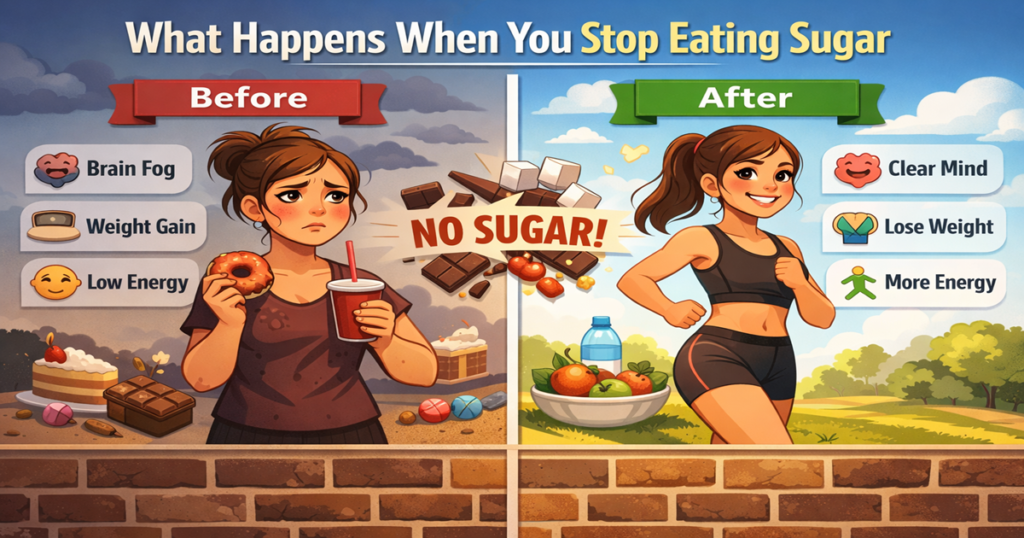
What happens when you stop eating sugar is one of the most frequently asked nutrition questions — and the science gives a genuinely compelling answer. The average American currently consumes 17 teaspoons of added sugar per day, more than double the American Heart Association’s recommended maximum of 9 teaspoons for men and 6 teaspoons for women. The UK picture is similar: Public Health England data shows British adults consume approximately 14 teaspoons of free sugars daily — well above the NHS recommendation of no more than 7 teaspoons. Moreover, a 2023 BMC Medicine study found that even a 5% increase in added sugar intake comes with a 6% higher risk of heart disease and a 10% higher risk of stroke.
Stopping or significantly reducing added sugar triggers a cascade of changes throughout the body — some challenging in the first days, many profoundly beneficial over weeks and months. This guide tracks what happens when you stop eating sugar day by day, week by week, and in the long term, drawing on peer-reviewed research, clinical dietitian guidance, and evidence from institutions including the Mayo Clinic, National Geographic, WebMD, Healthline, and leading nutrition scientists. It also explains the important distinction between added sugars — the ones driving health harm — and the natural sugars in whole foods, which behave differently in the body and carry important nutrients alongside them.
Added Sugar vs Natural Sugar: An Important Distinction
Before exploring what happens when you stop eating sugar, it is essential to understand what type of sugar matters most. The human body needs glucose — a form of sugar — as its primary fuel source. The brain, in particular, runs almost exclusively on glucose, making some sugar intake biologically necessary. Therefore, the health target is not eliminating all sugar from your diet but dramatically reducing added sugars — the sugars manufacturers add to processed foods and drinks during preparation.
Natural sugars found in whole fruits, vegetables, and dairy products come packaged with fibre, vitamins, minerals, and other nutrients that change how the body processes them. Alice Lichtenstein, a senior scientist at the Jean Mayer USDA Human Nutrition Research Center on Aging at Tufts University, explained to National Geographic that the dietary fibre in whole fruit slows absorption of its sugar, making it much easier for the body to handle. A mango containing more than 20 grams of natural sugar also provides protein, calcium, iron, magnesium, potassium, and vitamin C — the nutrients offset the sugar. By contrast, added sugars in fizzy drinks, sweets, biscuits, processed cereals, and sauces deliver calories with no nutritional offset. Katherine Zeratsky, a registered dietician at the Mayo Clinic, describes added sugars as empty calories — calories that lack nutrients.
Furthermore, Elaine Hon, clinical dietician and certified diabetes care specialist at Stanford Health Care, explains that any consumed sugar not immediately used for energy is stored as fat, resulting in increased weight gain, insulin resistance, and associated adverse outcomes including diabetes, obesity, and cardiovascular disease. This fat-storage pathway is the core mechanism through which excess added sugar drives the most serious chronic diseases.
What Happens in the First 24 to 72 Hours
The first few days after stopping added sugar are typically the most difficult — and understanding why makes them considerably easier to manage. Sugar activates the brain’s reward circuits in ways that have measurable neurological similarities to addictive substances. Dr. Robert Lustig, professor of paediatric endocrinology at the University of California San Francisco, has described sugar as acting like a drug — training the brain’s serotonin and dopamine pathways to anticipate and depend on regular sweet stimulation. When that stimulation is removed, the brain reacts with something resembling withdrawal.
During the first 24 to 72 hours without added sugar, blood glucose levels begin to normalise and insulin production tapers. The pancreas, which has been working overtime to manage repeated blood sugar spikes, begins to recover. However, as Science News Today’s 2025 analysis described, as the brain starts missing those sugary signals, withdrawal symptoms typically emerge. These commonly include irritability, fatigue, headaches, difficulty concentrating, and mood fluctuations. Cravings for sweet foods peak during this period and can be intense, particularly in people who have been consuming high amounts of added sugar for extended periods. INTEGRIS Health confirms that approximately 10% of the US population has what researchers describe as a genuine addiction to sugar — for these individuals, the first days can be particularly challenging.
It is worth noting that these withdrawal symptoms, while uncomfortable, are temporary and are themselves evidence that the body is adjusting. Most people find that the acute withdrawal phase passes within three to five days, after which the physical discomfort diminishes substantially.
What Happens During the First Week
By days four to seven, the most intense withdrawal symptoms typically begin to subside, and the first tangible benefits start to emerge. One of the most immediately noticeable changes is in energy levels. Registered dietitian Jennifer Nicole Bianchini, founder of Body to Soul Health, explains that when sugar is consumed, it is absorbed very quickly into the bloodstream, causing rapid spikes followed by crashes that leave people feeling sluggish. When sugar is eliminated, energy levels become more stable throughout the day — without the peaks and troughs that make afternoons feel exhausting and mornings feel dependent on caffeine and sugar to function.
Appetite begins to regulate during the first week. Functional dietitian Bianchini notes that excess sugar consumption can prevent the body from receiving proper fullness signals, causing overconsumption of calories. Furthermore, the cycle of high and low blood sugar that frequent sugar intake creates drives cravings for more sugar to restore energy — a reinforcing loop that makes moderation difficult. Breaking this cycle during the first week allows hunger hormones to reset, making it easier to recognise genuine hunger rather than sugar-driven cravings. A 2024 study published in Nutrition, Metabolism and Cardiovascular Diseases, which followed thousands of participants over 30 years, found that people eating less than 50 grams of added sugar daily weighed on average 10 pounds less and had waist circumferences 2.2 centimetres smaller than higher-sugar consumers.
Mood also begins to stabilise during the first week. The 2025 Parade analysis confirmed that blood sugar spikes and crashes directly impact mood stability, and that sugar-driven imbalances in gut bacteria affect the gut-brain axis — disrupting neurotransmitter production and contributing to mood variability. As blood sugar stabilises, many people notice fewer mood swings, reduced irritability, and a more even emotional baseline.
What Happens After Two Weeks
The two-week mark represents a significant milestone in what happens when you stop eating sugar. Multiple experts and clinical studies point to two weeks as the point at which several noticeable physical changes begin to become visible, and at which the biological patterns of sugar dependence have largely been disrupted.
Skin health is one of the most frequently cited two-week changes. Dr. Anthony Youn, a physician, told The Healthy that visible skin improvements can emerge within 14 days of quitting sugar. The mechanism is well-documented: sugar damages elastin — the protein that keeps skin supple and springy — and breaks down collagen, the structural protein that maintains skin firmness. This process, called glycation, accelerates the formation of fine lines and wrinkles. Furthermore, blood sugar spikes trigger inflammation throughout the body that manifests on the skin as acne and redness. A 2025 study published in Food Science and Nutrition confirmed that while sugar accelerates skin ageing, foods rich in antioxidants — which tend to replace sugary foods in the diet — actively slow the process. By week two, the reduction in inflammation and glycation begins to produce a visible improvement in skin clarity and tone.
Sleep quality typically improves significantly by two weeks. Eat This’s analysis of clinical research confirmed that a 2016 study in the Journal of Clinical Sleep Medicine found that people eating high-sugar diets experienced restless, less restorative sleep. The mechanism involves sugar’s disruption of serotonin and melatonin — the hormones that regulate sleep cycles. High blood sugar before sleep interferes with the body’s ability to maintain stable glucose during the night, causing nocturnal awakenings as the body works to stabilise levels. By two weeks without added sugar, sleep hormone regulation tends to normalise, producing deeper, more consistent rest.
Dental health also begins improving immediately — in fact, it is the benefit that starts from day one. Bacteria in the mouth produce acids when they encounter sugar, eating away at tooth enamel and causing decay. They also create the conditions for gum disease and gingivitis. Research published in BDJ Open in 2024 confirmed that sugar is a key driver of periodontitis — a leading cause of tooth loss with documented links to heart disease, stroke, and diabetes. By week two, the bacterial environment in the mouth has already begun shifting, and breath freshness typically improves as sugar-feeding bacteria decline.
| Timeframe | What Happens | Mechanisms | Evidence |
| Days 1-3 | Cravings, headaches, irritability, fatigue | Dopamine/serotonin withdrawal, glucose normalisation | INTEGRIS Health; UCSF research |
| Days 4-7 | Energy stabilises, mood improves, appetite resets | Blood sugar regulation, gut-brain axis reset | Bianchini RD; 30-year diet study, 2024 |
| Week 2 | Skin clears, sleep deepens, teeth healthier | Reduced glycation, melatonin normalisation | Dr. Youn; Food Sci & Nutr 2025; JCS Med 2016 |
| Month 1 | Weight loss visible, mental clarity improves, cravings largely gone | Insulin sensitivity, fat metabolism, neurological | Science News Today; Healthline research |
| 3-6 Months | Reduced inflammation, better cholesterol, heart risk drops | Triglyceride reduction, visceral fat loss | WebMD; BMC Medicine 2023; AHA guidance |
| Long-term | Lower diabetes risk, reduced cancer risk, slower ageing | Insulin regulation, reduced AGEs, inflammation | Advances in Nutrition 2025; Stanford Health |
What Happens After One Month
By 30 days without added sugar, most people who stick with the change describe a genuinely different relationship with food, energy, and mental clarity. Science News Today’s 2025 analysis described this point as a new normal: the body is no longer reliant on external sources of rapid energy, metabolism becomes more efficient, and fat burning increases — producing weight loss not just from caloric reduction but from improved hormonal balance and reduced inflammation.
Mental clarity is one of the most consistently reported one-month benefits. National Geographic cited research showing that sugar hinders the ability to focus and that it can block memory receptors in the brain. Nutritional Neuroscience published a study linking sugar consumption to negative changes in the brain’s frontal cortex associated with cognitive problems. After a month free from added sugar, the frontal cortex is no longer being disrupted by repeated glucose spikes, and many people report improved concentration, sharper memory, reduced brain fog, and a greater capacity for sustained attention that was previously unavailable to them.
Depression and anxiety symptoms frequently improve by the one-month mark. A 2015 study monitoring 70,000 post-menopausal women found that those consuming the most added sugar and refined carbohydrates had the highest risk of new-onset depression compared to those consuming the least. Research reviewed in the 2025 Healthline analysis confirmed that diets high in added sugar are linked to anxiety and depressive symptoms, and that reducing sugar intake helps diminish these symptoms. The gut-brain axis mechanism is central here: sugar disrupts gut microbiome balance, and because the gut produces approximately 90% of the body’s serotonin, this disruption has direct consequences for mood and emotional regulation. By a month in, the gut microbiome has had sufficient time to begin meaningful recovery.
Allergy and immune symptoms may also reduce. A 2023 Frontiers in Allergy study found that sugar overconsumption can lead to allergy development or worsened existing allergy symptoms through its impact on immune function and inflammation promotion. Registered dietitian Megan Gilmore told The Healthy that cutting sugar often means fewer sniffles year-round and reduced allergy and asthma symptoms — benefits that become most noticeable around the one-month point as systemic inflammation declines.
The Long-Term Effects of Stopping Sugar
The long-term picture of what happens when you stop eating sugar — sustained over months and years — is where the most clinically significant health benefits accumulate. These are not merely quality-of-life improvements but measurable reductions in the risk of the leading causes of death and chronic disease in both the UK and USA.
Heart Disease Risk Reduction
Heart disease is the leading cause of death in both the UK and USA, and added sugar is one of its most established dietary contributors. A 2023 BMC Medicine study found that even a 5% increase in added sugar intake produces a 6% higher risk of heart disease and a 10% higher risk of stroke. Furthermore, WebMD’s clinical review confirmed that high added sugar consumption raises triglycerides — a type of fat in the blood that is directly linked to cardiovascular risk — and that people consuming less than 20% of calories from added sugars tend to have lower triglycerides even when controlling for body weight. Over the long term, sustained sugar reduction produces measurable improvements in triglyceride levels, blood pressure, and overall cardiovascular risk profile.
Type 2 Diabetes Risk Reduction
A 2025 research review published in Advances in Nutrition found that for each serving of a sugary drink per week, the risk of type 2 diabetes increases by 4%. Furthermore, 2020 research in The American Journal of Nutrition found that eating a diet low in added sugar while increasing vegetables, fruits, whole grains, and lean protein can lower type 2 diabetes risk by a significant margin. Over the long term, the improved insulin sensitivity that follows sustained sugar reduction reduces the foundational risk factor — insulin resistance — that precedes the development of type 2 diabetes. For those with pre-diabetes or metabolic syndrome, sustained sugar reduction can meaningfully delay or prevent progression to full type 2 diabetes.
Reduced Cancer Risk
National Geographic’s 2025 analysis cited increased risk of more than a dozen different cancers as a documented harm associated with excessive added sugar consumption. The mechanisms involve both the direct effect of chronic inflammation — which creates an environment in which cancer cells can proliferate — and the indirect effects of obesity and metabolic dysfunction, which are themselves established cancer risk factors. While the evidence base for specific cancer risk reduction from sugar removal is still developing, the inflammation-reduction pathway provides a biologically plausible and evidence-supported mechanism for long-term cancer risk reduction.
Slower Biological Ageing
Dr. Robert Lustig’s widely cited observation — that sugar turns on the ageing programmes in the body, accelerating biological ageing with every gram consumed — reflects a growing body of evidence on the ageing effects of dietary sugar. The process of glycation, in which sugar molecules attach to proteins and fats, produces compounds called Advanced Glycation End products (AGEs) that damage tissue, increase inflammation, and accelerate cellular ageing throughout the body. Furthermore, 2025 Food Science and Nutrition research confirmed that while sugar accelerates skin ageing specifically, the underlying glycation and inflammation mechanisms operate throughout every tissue and organ system. Sustained sugar reduction over months and years allows the body’s natural repair mechanisms to operate without the constant disruption of glycation and inflammatory insult.
The Children’s Evidence: What a 10-Day Sugar Fast Does
One of the most striking bodies of evidence on what happens when you stop eating sugar comes from a study involving over 40 children aged 8 to 18, documented in The Conversation’s November 2025 scientist explainer. The researchers asked the children to eliminate fructose — specifically added fructose from processed foods and sugary drinks — for just 10 days. They were not put on a restrictive diet otherwise: they still ate bread, hotdogs, snacks, and regular foods. The only change was removing fructose-containing added sugars. The results showed significant reductions in blood pressure, LDL cholesterol, triglycerides, fasting glucose, and liver fat in just 10 days. The children also reported feeling better and were observed to be better behaved. These findings are particularly striking because they demonstrate measurable physiological benefits from sugar reduction in children within less than two weeks — even without broader dietary changes.
How Much Sugar Are We Actually Consuming?
Understanding what happens when you stop eating sugar requires understanding how much sugar most people are starting from. The gap between recommended and actual consumption is dramatic in both the UK and USA.
| Country | Average Daily Added Sugar | Official Recommendation | Common High-Sugar Sources |
| USA | 17 teaspoons (68g) | Max 9 tsp (men), 6 tsp (women) — AHA | Sodas, processed foods, cereals, sauces |
| UK | ~14 teaspoons (56g) | Max 7 teaspoons (30g) — NHS | Biscuits, confectionery, drinks, yogurt |
| WHO guidance | N/A | Max 12 teaspoons (50g), ideally under 6 tsp | Applies to both free sugars and added |
| A 20oz Coca-Cola (USA) | 65 grams = 16 teaspoons | Exceeds most people’s entire daily limit | Single drink, zero nutritional value |
| A 300ml Coca-Cola (UK) | ~30 grams = 7 teaspoons | Equals a full day’s NHS recommendation | One bottle |
Practical Tips for Stopping or Reducing Added Sugar
Stopping added sugar completely at once — often called going cold turkey — is recommended by some clinicians as the most effective method, since it breaks the habit cycle most decisively. However, Jennifer Nicole Bianchini and other functional dietitians note that a gradual reduction approach is often more sustainable for people with high sugar intakes or strong sugar dependencies. Research confirms that even modest reductions improve insulin sensitivity, reduce cravings over time, and decrease inflammation — making smaller steps genuinely worthwhile. The following practical strategies are evidence-informed:
- Eliminate sugary drinks first: A single 20-ounce US bottle of Coca-Cola contains 65 grams of added sugar — 30% more than most people’s entire daily limit. Harvard nutrition scientists advise that avoiding sugary beverages is by far the most important first step, as liquid sugar is the most harmful form — it provides no satiety and is absorbed immediately into the bloodstream.
- Read nutrition labels diligently: Sugar is hidden in foods that do not taste sweet — bread, pasta sauces, salad dressings, tinned soups, and condiments. In the UK, look for ‘of which sugars’ on the nutrition panel; aim for under 5g per 100g as a guide for low-sugar products. In the USA, the Nutrition Facts label now lists added sugars separately — a regulatory change specifically designed to help consumers identify them.
- Replace rather than restrict: Replace sugary snacks with whole fruits, nuts, full-fat yoghurt without added sugar, or vegetables with hummus. These provide natural sweetness, fibre, protein, and nutrients that satisfy cravings without the blood sugar spike. National Geographic nutrition researchers consistently recommend this whole-food replacement approach rather than pure restriction.
- Manage withdrawal with protein and healthy fats: During the first three to five days, eating protein-rich meals and foods containing healthy fats (avocado, nuts, eggs, olive oil) helps maintain stable blood sugar and reduces the intensity of sugar withdrawal symptoms by preventing the energy dips that drive cravings.
- Sleep and exercise: Both adequate sleep and regular physical activity independently improve insulin sensitivity and blood sugar regulation, making sugar withdrawal easier to manage and reinforcing the metabolic benefits of reducing added sugar.
- Use the 48-hour rule for cravings: When a sugar craving strikes, wait 48 hours before acting on it. Research on craving psychology consistently shows that most cravings peak and pass within 20 minutes — a pause of longer duration almost always reveals that the craving has diminished without being satisfied.
- Do not aim for perfection: Bianchini and other dietitians emphasise that long-term success in reducing sugar comes not from perfect elimination but from consistent reduction. A balanced approach — focusing on whole foods and allowing occasional treats in moderation — is more powerful for long-term health than any strict 30-day challenge followed by return to previous habits.
Frequently Asked Questions About Stopping Sugar
Q1. Is it actually possible to stop eating all sugar?
It is nearly impossible to eliminate all sugar from your diet, since all foods containing carbohydrates — including vegetables, legumes, and whole grains — are broken down into glucose in the body. What is both possible and powerfully beneficial is eliminating or dramatically reducing added sugars — the sugars manufacturers add to processed foods and drinks. This is the target of all major dietary guidelines from the American Heart Association, the NHS, and the World Health Organization. The natural sugars in whole fruits, dairy, and vegetables come with fibre and nutrients that fundamentally change how your body processes them, making them considerably less harmful and often nutritionally beneficial.
Q2. How long does sugar withdrawal last?
For most people, the acute phase of sugar withdrawal — characterised by cravings, headaches, fatigue, and mood changes — lasts between three and five days. For people with very high prior sugar intakes or those who have been consuming large amounts of added sugar for many years, withdrawal symptoms may last up to ten days. INTEGRIS Health’s clinical guidance confirms that going cold turkey — eliminating added sugar completely rather than moderating — typically produces a shorter and more definitive withdrawal period than gradual reduction, because it fully breaks the reinforcement cycle rather than sustaining it at a lower level. Most people find that by days seven to ten, the acute discomfort has largely resolved.
Q3. Will stopping sugar help me lose weight?
Stopping added sugar is likely to support weight loss for most people, though it does not guarantee it automatically. Eat This’s registered dietitian analysis explains that added sugars are empty calories with no nutritional value — eliminating them removes caloric intake without nutritional loss. Furthermore, the blood sugar stabilisation that follows sugar reduction significantly diminishes the cravings and overeating cycles that high-sugar diets produce. Eliminating a daily soda habit alone can result in weight loss of approximately half to one pound per week. Moreover, a 30-year dietary study published in Nutrition, Metabolism and Cardiovascular Diseases found that people consuming below 50 grams of added sugar daily weighed on average 10 pounds less and had significantly smaller waist circumferences than higher-sugar consumers.
Q4. What happens to your skin when you stop eating sugar?
Skin improvements are among the most noticeable benefits of stopping added sugar and can begin emerging within 14 days. Sugar damages both collagen and elastin through the process of glycation — the binding of sugar molecules to proteins — which directly accelerates the development of fine lines, wrinkles, and loss of skin firmness. Sugar also triggers systemic inflammation that manifests as acne and skin redness. By removing added sugar, glycation slows, inflammation decreases, and the skin’s natural repair mechanisms can operate more effectively. A 2025 Food Science and Nutrition study confirmed that sugar accelerates skin ageing while antioxidant-rich foods — which tend to replace sugar in the diet — actively slow it.
Q5. Does stopping sugar improve mental health?
Research consistently links high added sugar consumption to increased rates of depression and anxiety, and reducing sugar intake is associated with improvement in these conditions. A 2015 study of 70,000 post-menopausal women found that the highest added sugar consumers had the highest risk of new-onset depression. The mechanisms involve both the direct neurological effects of blood sugar volatility on mood and the indirect effects through the gut-brain axis: sugar disrupts the gut microbiome, which produces approximately 90% of the body’s serotonin and plays a central role in emotional regulation. By reducing added sugar, both pathways — blood sugar stability and gut health — improve, producing more stable and generally more positive mood states.
Q6. Is fruit sugar as harmful as added sugar?
No — fruit sugar is considerably less harmful than added sugar and is accompanied by important nutritional benefits. Whole fruit contains fibre, vitamins, minerals, and antioxidants that fundamentally change how the body processes its natural fructose. The fibre slows sugar absorption, preventing the blood sugar spikes that added sugars produce. Furthermore, the nutritional compounds in fruit provide real health value that offsets its sugar content. What research consistently identifies as harmful is fructose in its concentrated, isolated form — as in high-fructose corn syrup and sucrose added to processed foods — stripped of the fibre and nutrients that would naturally accompany it. The World Health Organization’s sugar reduction guidelines specifically target free sugars, including added sugars, not the naturally occurring sugars in intact whole fruit.
Q7. How do you manage sugar cravings after stopping?
Managing sugar cravings after stopping added sugar requires a combination of nutritional, behavioural, and environmental strategies. Eating protein and healthy fats at each meal stabilises blood sugar and reduces the intensity of cravings. Whole fruits provide natural sweetness with fibre that satisfies the palate without driving blood sugar spikes. Staying well hydrated is important, as thirst is frequently misidentified as sugar craving. During the first days, strategic distraction and the commitment to wait out cravings — which typically peak and pass within 20 minutes — is more effective than seeking sugar substitutes. Over time, as insulin sensitivity improves and the gut microbiome adjusts, cravings naturally diminish. Most people who maintain low added sugar intake for 30 days or more report that intensely sweet foods they previously craved now taste unpleasantly sweet — a palate recalibration that makes long-term sugar reduction much easier to sustain.
Conclusion: What Happens When You Stop Eating Sugar Is Worth the Effort
What happens when you stop eating sugar is a transformation that unfolds across days, weeks, and months — from the challenging first 72 hours of withdrawal to the profound long-term reductions in heart disease, diabetes, and biological ageing that sustained sugar reduction produces. The science is clear and consistent: added sugar is one of the most consequential dietary variables affecting health in both the UK and USA, contributing to the leading causes of death including cardiovascular disease, type 2 diabetes, and multiple cancers through well-understood biological mechanisms.
Moreover, the benefits of stopping added sugar are not reserved for people with existing health conditions. Improved energy stability, better sleep, clearer skin, sharper mental focus, more stable mood, reduced inflammation, and healthier teeth begin emerging within days and continue compounding over months and years. A 2025 review in Advances in Nutrition confirmed that each serving of sugary drinks per week raises diabetes risk by 4% — and that removing those servings has an equivalent protective effect in the opposite direction. Furthermore, the 10-day children’s fructose elimination study demonstrated that even short-term, targeted sugar reduction produces measurable improvements in blood pressure, cholesterol, triglycerides, and liver fat in under two weeks.
Therefore, stopping or significantly reducing added sugar is one of the highest-impact dietary changes most people can make. It does not require a complete dietary overhaul. It does not require perfection. It requires the consistent choice, made daily, to replace empty calories with nourishing ones — and the patience to allow the body the weeks it needs to reveal the remarkable results of that choice.