
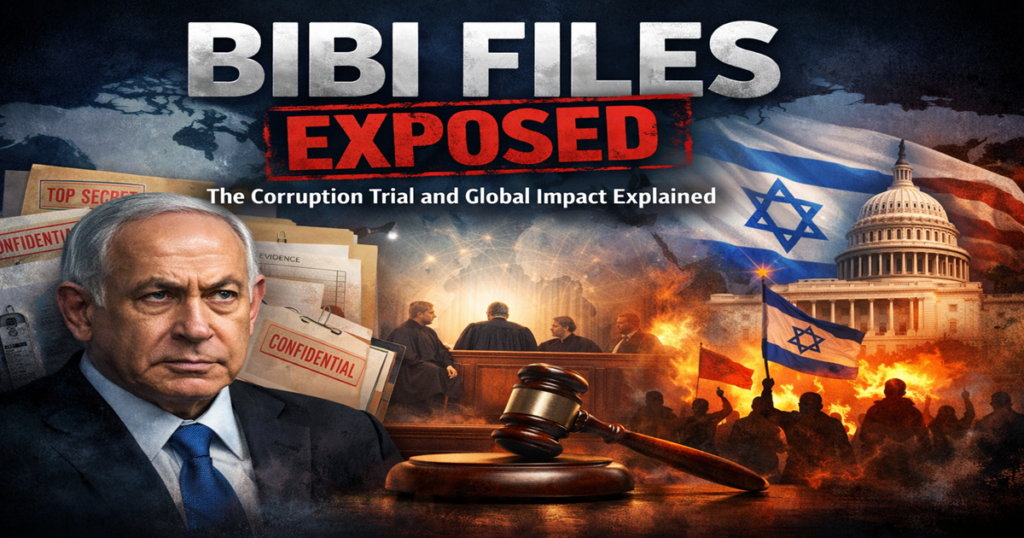
The emergence of the “Bibi Files” has sent shockwaves through the international political landscape, creating a complex intersection of legal drama and diplomatic tension. As we navigate the year 2026, the implications of these leaked recordings and documents continue to reshape how the public perceives high-level political accountability. This comprehensive report delves into the core of the controversy, examining the specific cases involved and the far-reaching consequences for global governance.
What are the Bibi Files? A 2026 Comprehensive Overview
The term “Bibi Files” refers to a massive cache of leaked interrogation footage and internal documents related to the ongoing corruption trials of Benjamin Netanyahu. While the legal proceedings have spanned several years, the 2024 and 2025 leaks provided the public with an unprecedented “fly-on-the-wall” perspective of the investigations. These files contain hours of recorded testimonies from key witnesses, business moguls, and family members, offering a raw look at the allegations of bribery, fraud, and breach of trust.
Furthermore, the files have transcended simple legal evidence. They have become a cultural and political phenomenon, sparking debates about the right to privacy versus the public’s right to know. In 2026, the discourse has shifted from the content of the leaks to the systemic failures that allowed such high-level corruption to be alleged in the first place.
The Legal Core: Case 1000, 2000, and 4000 Breakdown
To understand the gravity of the Bibi Files, one must dissect the three primary cases that form the backbone of the prosecution’s argument. Each case presents a different facet of alleged misconduct, ranging from illicit gifts to quid-pro-quo media deals.
Case 1000: The Gifts Scandal
This case revolves around allegations that Netanyahu and his family received expensive gifts from wealthy businessmen, including cigars, champagne, and jewelry. The prosecution argues that these were not merely tokens of friendship but were exchanged for political favors. Consequently, this case highlights the blurred lines between personal relationships and official duties.
Case 2000: The Media Collusion
Case 2000 involves recorded conversations between Netanyahu and Arnon Mozes, the publisher of a major newspaper. The discussions allegedly centered on a deal where the newspaper would provide more favorable coverage of the Prime Minister in exchange for legislation that would hurt a rival publication. Therefore, this case strikes at the heart of media independence and democratic integrity.
Case 4000: The Bezeq-Walla Affair
Considered the most serious of the three, Case 4000 alleges a bribery scheme involving the telecommunications giant Bezeq. The prosecution claims that regulatory benefits worth hundreds of millions of dollars were granted to Bezeq in exchange for positive coverage on the Walla news site. As a result, this case demonstrates the potential for massive corporate influence over government policy.
Comparison of Witness Testimonies vs. Leaked Footage
| Aspect | Official Court Testimony | Leaked “Bibi Files” Footage |
| Tone | Formal, guarded, and legalistic. | Raw, emotional, and often confrontational. |
| Context | Filtered through lawyers and court rules. | Unfiltered reactions during police questioning. |
| Public Impact | Reported second-hand by journalists. | Direct emotional connection with the audience. |
| Legal Admissibility | Fully admissible as primary evidence. | Contentious; often used for public pressure. |
Geopolitical Fallout: The USA and UK Perspective
The international community has watched the progression of the Bibi Files with bated breath. For the United Kingdom and the United States, the stability of their Middle Eastern partner is a matter of national security. However, the ethical questions raised by the files have forced a re-evaluation of diplomatic strategies.
In the UK, the Foreign, Commonwealth & Development Office has maintained a neutral but observant stance. Members of Parliament have frequently cited the Bibi Files during debates regarding arms exports and diplomatic support, arguing that a leader under such legal scrutiny complicates long-term bilateral agreements. Moreover, the British public’s interest in the case has led to increased pressure on the government to advocate for transparent judicial processes.
Similarly, the USA has faced a delicate balancing act. While the “special relationship” remains a cornerstone of American foreign policy, the 2026 political climate in Washington emphasizes anti-corruption and democratic values. Consequently, the US State Department has had to navigate the fine line between supporting a strategic ally and upholding the principles of the rule of law. The Bibi Files have effectively become a litmus test for how modern democracies handle the legal woes of their closest partners.
Frequently Asked Questions (FAQs)
What is the current status of the Bibi Files trial in 2026?
The trial is currently in its advanced stages, with the court reviewing the impact of the leaked footage on witness credibility. While a final verdict has not yet been reached, the proceedings continue to dominate the 2026 news cycle.
Are the leaked recordings in the Bibi Files legal?
The legality of the leak itself is under investigation, as it involved unauthorized disclosure of investigative materials. However, the content of the recordings continues to be a central point of public and legal discussion.
How has the UK government reacted to the Bibi Files?
The UK government has officially stated that the trial is an internal legal matter. Nevertheless, the files have influenced parliamentary discussions regarding diplomatic transparency and regional stability.
What is Case 4000 and why is it significant?
Case 4000 is the most severe case, involving allegations of bribery linked to regulatory favors for a telecommunications company. It is significant because it involves the largest financial implications of the three cases.
Can the Bibi Files lead to a change in government?
While the legal outcome is separate from the political process, the public outcry generated by the files has historically influenced voter sentiment and coalition stability.