Iran fired cluster bomb missiles at civilian areas in Israel. Israel’s foreign ministry confirmed this fact publicly. The IDF independently verified it. Moreover, cluster munitions are among the most internationally condemned weapons in existence. They scatter dozens of explosive submunitions across a wide area. Many fail to explode immediately. They function as de facto landmines for years afterward. Therefore, understanding exactly what these weapons are — and who uses them — matters enormously for anyone following this conflict.
Furthermore, this is not a simple story. Both sides in this war have used weapons that cause civilian casualties. Therefore, this article examines the verified facts about cluster munitions, the international legal framework that governs them, the civilian impact on both sides, and what the international community says about their use.
What Are Cluster Munitions? A Clear Explanation
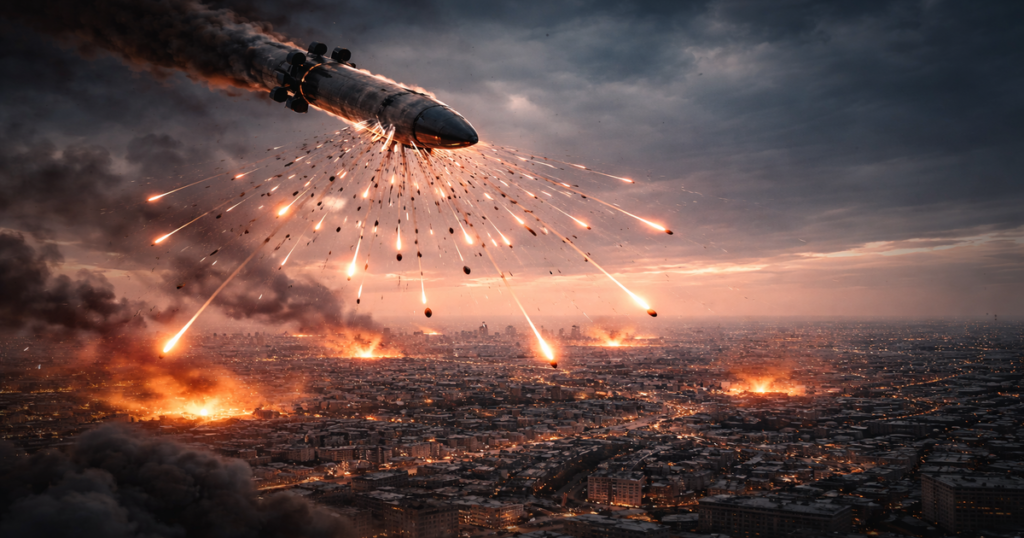
A cluster munition is a weapon that opens in mid-air. It releases dozens of smaller explosive devices called submunitions. These scatter across a wide area. Moreover, they are not precision weapons. They cannot distinguish between a soldier and a child. Therefore, their use in or near populated areas almost always causes civilian casualties.
The Convention on Cluster Munitions website describes their mechanism clearly. The warhead opens on descent. Submunitions disperse across a large radius. Each one detonates on impact. Furthermore, the critical problem is the dud rate. Between 10% and 40% of submunitions fail to detonate immediately. They lie on the ground. They look like small cylindrical objects — sometimes colourful. Children pick them up. Farmers trigger them while ploughing fields. As a result, cluster munitions keep killing and maiming civilians long after a conflict ends.
Verified: Iran Used Cluster Munitions Against Israel
The IDF confirmed this fact publicly. Iran fired a Khorramshahr-4 ballistic missile carrying a cluster munition warhead at Israel on March 1. The IDF confirmed a second cluster warhead attack on March 3. Moreover, this is not the first time Iran used this weapon against Israel. Iran previously fired a Khorramshahr-4 with a cluster warhead during the June 2025 Israel-Iran war.
How Iran’s Cluster Missile Works
The Khorramshahr-4 is a medium-range Iranian ballistic missile. Its cluster warhead opens during descent. It releases approximately 20 submunitions. Each submunition carries 2.5 kilograms of explosives. They scatter across a radius of up to 8 kilometres. Moreover, this means a single missile threatens an area larger than many entire city centres. Therefore, firing it at Tel Aviv — a densely populated metropolitan area — places thousands of civilians at risk.
What Damage Did Iran’s Cluster Missiles Cause?
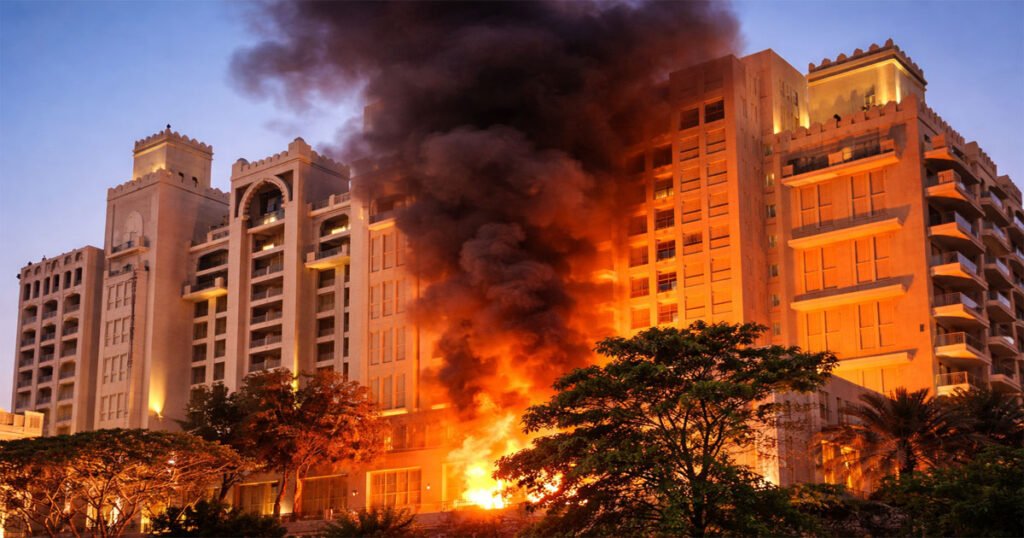
The Critical Threats Project at the American Enterprise Institute published verified reports on both attacks. The March 3 cluster warhead landed near Tel Aviv. It injured at least 12 people. Moreover, NBC News reported that Iranian ballistic missiles killed at least 11 people and injured over 1,000 others in Israel since February 28. Furthermore, the IDF confirmed that a strike hit a residential area in Tel Aviv on March 1. A civilian woman in her 40s died. Twenty-seven others were injured. A nine-storey building was struck in northern Israel.
Civilian Casualties on the Iranian Side
A balanced analysis requires examining civilian casualties on both sides. Therefore, the civilian toll inside Iran from US and Israeli strikes is significant and independently documented.
The Red Crescent confirmed over 600 civilian deaths in Iran by March 3. Human Rights Activists in Iran estimated 742 civilians killed. Moreover, the single most devastating individual incident was the destruction of a girls’ elementary school in Minab. Iranian state media reported 148 students killed and 95 wounded. The Washington Post and New York Times both verified footage from immediately after the attack. Furthermore, the New York Times noted the school stood less than 60 metres from a large IRGC naval base. Israel denied targeting the school. CENTCOM confirmed it was investigating internally.
Additionally, a sports hall in Lamerd was bombed during a girls’ practice session. At least 18 civilian girls died. UNESCO condemned both incidents as grave violations of international humanitarian law. As a result, the civilian death toll inside Iran represents one of the most serious humanitarian crises of this conflict.
The International Legal Framework: Who Is Bound by What?
The Convention on Cluster Munitions is the primary international treaty banning these weapons. It prohibits the use, production, transfer, and stockpiling of cluster munitions. Moreover, 111 countries have signed or ratified this convention. However, three of the most important parties to this conflict have not.
| Country/Party | Signed Convention on Cluster Munitions? | Legal Status |
| Iran | No — not a signatory | Not legally bound by the Convention |
| Israel | No — not a signatory | Not legally bound by the Convention |
| United States | No — not a signatory | Not legally bound by the Convention |
| Germany, France, UK (EU members) | Yes — signatories | Legally prohibited from using cluster munitions |
| Total signatories worldwide | 111 countries | Bound by full ban on use and production |
Therefore, Iran’s use of cluster munitions does not technically violate a treaty it signed. However, international humanitarian law — specifically the principle of distinction and proportionality under the Geneva Conventions — still applies to all parties in any armed conflict, regardless of treaty signatures. Moreover, the UN Secretary-General and multiple human rights organisations have condemned cluster munitions use in this conflict on all sides.
What the UN and Human Rights Organisations Say
The international response to cluster munitions use in this war has been clear and consistent. Moreover, condemnation has come from across the political spectrum of international institutions.
- United Nations: The UN Secretary-General called for immediate cessation of all attacks on civilian infrastructure and civilians. Furthermore, the UN urged all parties to comply with international humanitarian law regardless of their treaty obligations.
- Human Rights Watch: HRW documented Iranian cluster munition strikes on Israel and condemned them explicitly. Moreover, HRW also documented civilian casualties from US and Israeli strikes inside Iran, calling for independent investigations into both.
- UNESCO: UNESCO condemned the strike on the Minab girls’ school as a grave violation of international humanitarian law. Furthermore, UNESCO called the killing of 148 schoolgirls one of the most devastating single incidents involving children in any recent armed conflict.
- Germany, France, and UK: The E3 issued a joint statement condemning what they described as indiscriminate Iranian attacks on civilian populations across the region. Moreover, the statement called Iran’s targeting of civilian infrastructure a serious violation of international law.
- Red Cross (ICRC): The International Committee of the Red Cross called on all parties to observe the rules of international humanitarian law. Furthermore, the ICRC specifically highlighted the long-term danger posed by unexploded cluster submunitions to civilian populations after conflict ends.
The Dud Problem: How Cluster Bombs Keep Killing After the War Ends
The immediate casualties from cluster munitions are devastating. However, the long-term danger is equally serious. Moreover, this is why the international community condemns these weapons so strongly — even beyond their immediate impact.
Cluster submunitions have a failure rate of between 10% and 40%. They do not explode on contact. They lie on the ground, in fields, on rooftops, in playgrounds. Furthermore, Lebanon still clears Israeli cluster bombs dropped during the 2006 war — twenty years later. Laos still clears American cluster munitions from the Vietnam War era. As a result, any area struck by cluster munitions becomes dangerous for civilians for decades after the conflict ends. Therefore, their use anywhere near populated areas — as occurred near Tel Aviv — creates a long-term humanitarian crisis that outlasts the war itself.
Both Sides’ Positions: What Iran and Israel Say
Iran’s Position
Iran has not directly addressed the cluster munitions allegations in official statements reviewed for this article. The Iranian government maintains that its missile strikes target military and strategic infrastructure. Moreover, Iranian state media frames all strikes as legitimate retaliation for what it describes as the illegal US-Israeli aggression against Iranian sovereignty and civilian infrastructure. Furthermore, Iranian Foreign Minister Abbas Araghchi called the school strike in Minab a war crime by Israel — an allegation Israel denies.
Israel’s Position
Israel’s Foreign Ministry confirmed that Iran deliberately used cluster munitions. Israel’s statement argued that these weapons — which disperse explosives across wide civilian areas — demonstrate Iran’s intent to maximise civilian casualties. Moreover, the Israeli Ministry of Foreign Affairs stated that Iran’s weapons are not designed for precision. They are designed to kill as many people as possible across the widest possible area. Furthermore, the IDF confirmed both cluster warhead attacks publicly and shared technical details about the Khorramshahr-4 missile system.
However, it is important to note that Israel itself is not a signatory to the Convention on Cluster Munitions. Human Rights Watch documented Israeli use of cluster munitions in Lebanon during the 2006 war. Moreover, the US transferred cluster munitions to Ukraine in 2023 — a decision that drew significant international criticism. Therefore, none of the primary parties in this conflict occupies unchallenged moral high ground on this specific weapons issue.
Summary: Verified Facts vs Allegations
| Claim | Verified? | Source |
| Iran fired cluster warheads at Israel on March 1 | Yes — confirmed | IDF, Times of Israel, Critical Threats Project |
| Iran fired cluster warheads at Israel on March 3 | Yes — confirmed | IDF, Critical Threats Project, NBC News |
| Cluster warhead injured 12 people near Tel Aviv | Yes — confirmed | Critical Threats Project (Mar 3 evening report) |
| Iran used Khorramshahr-4 missile with cluster warhead | Yes — confirmed | IDF, Critical Threats Project |
| Israel’s Minab school strike killed 148 girls | Footage verified, numbers unconfirmed | Washington Post, New York Times (footage only) |
| Lamerd sports hall — 18 civilian girls killed | Yes — reported multiple sources | Wikipedia (2026 Iran conflict) |
| 742 civilians killed in Iran by March 3 | Yes — estimated | Human Rights Activists in Iran, Red Crescent |
| Iran previously used cluster bombs in June 2025 war | Yes — confirmed | IDF, Critical Threats Project |
Conclusion
The verified facts are clear. Iran fired cluster munition warheads at Israel during this conflict. These weapons scattered explosives across civilian areas of Tel Aviv. They injured at least 12 people directly and contributed to a broader civilian casualty toll of over 1,000 injured and 11 killed by Iranian missiles since February 28.
Moreover, the broader picture is equally clear. Both sides in this war have caused significant civilian casualties. Over 742 civilians died inside Iran. A girls’ school in Minab was destroyed. A sports hall full of girls in Lamerd was bombed. Furthermore, none of the three primary actors — Iran, Israel, or the United States — has signed the Convention on Cluster Munitions. Therefore, the legal accountability for these weapons remains a complex and contested question.
However, one principle of international law is not contested. The Geneva Conventions’ rules on distinction and proportionality apply to all parties in any armed conflict. As a result, the use of weapons that cannot distinguish between soldiers and civilians — and that continue killing civilians for decades after the war ends — represents a challenge to the most fundamental principles of international humanitarian law. The international community must hold every party accountable. That accountability cannot be selective.
Frequently Asked Questions (FAQs)
Q1: Did Iran actually use cluster bombs against Israel?
Yes. The IDF publicly confirmed that Iran fired a Khorramshahr-4 ballistic missile with a cluster munition warhead at Israel on March 1. A second confirmed cluster warhead attack occurred on March 3. Moreover, Iran had used the same weapon — a Khorramshahr-4 with cluster warhead — against Israel during the June 2025 war. The Critical Threats Project at the American Enterprise Institute independently documented both attacks.
Q2: Are cluster munitions illegal under international law?
The Convention on Cluster Munitions bans cluster munitions for all signatories. 111 countries have signed it. However, Iran, Israel, and the United States have not signed this convention. Therefore, they are not legally bound by its terms. Nevertheless, all parties in any armed conflict remain bound by the Geneva Conventions’ core principles — including the prohibition on indiscriminate attacks on civilian populations.
Q3: What makes cluster munitions especially dangerous to civilians?
Cluster munitions scatter dozens of submunitions across a wide area — up to 8 kilometres in Iran’s case. They cannot distinguish between military targets and civilians. Moreover, between 10% and 40% of submunitions fail to detonate immediately. These duds become de facto landmines. They kill and injure civilians — often children — for years or even decades after the conflict ends. Lebanon still clears cluster bombs from the 2006 war.
Q4: Has Israel ever used cluster munitions?
Yes. Human Rights Watch documented Israeli use of cluster munitions extensively in Lebanon during the 2006 war. Israel fired approximately four million cluster submunitions into southern Lebanon in that conflict. Moreover, Israel is not a signatory to the Convention on Cluster Munitions. Therefore, Israel faces the same legal ambiguity as Iran regarding these weapons.
Q5: What is the civilian death toll on both sides?
In Israel, Iranian ballistic missiles killed at least 11 people and injured over 1,000 since February 28. In Iran, the Red Crescent confirmed over 600 civilian deaths by March 3, while Human Rights Activists in Iran estimated 742 killed. Moreover, the single deadliest incident was the Minab girls’ school strike, with 148 students reported killed — though the exact number remains independently unconfirmed. The Lamerd sports hall bombing killed at least 18 civilian girls. Both sides’ civilian casualties are documented and condemned by international human rights organisations.