
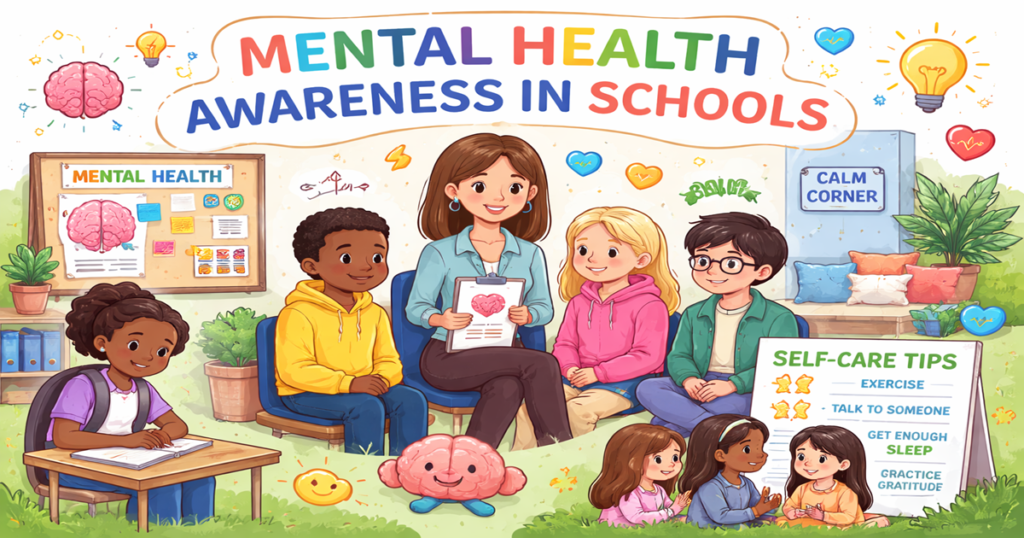
Mental health awareness in schools has become one of the most urgent educational and public health priorities of the 2020s. The statistics that define the current landscape are sobering: approximately 1 in 6 children in the UK will experience a diagnosable mental health problem in any given year, according to the Mental Health Foundation. In the United States, approximately 40% of high school students report experiencing prolonged feelings of sadness or hopelessness, and roughly 20% have seriously considered attempting suicide, according to CDC data. Nearly 60% of teenagers globally report experiencing some form of mental health challenge such as anxiety or depression. Moreover, in England, the number of children and young people in contact with CAMHS — Child and Adolescent Mental Health Services — has expanded at over four times the pace of the psychiatry workforce since 2016, according to the British Medical Association.
Schools occupy a uniquely powerful position in addressing this crisis. Young people spend more waking hours in school than anywhere else. Teachers and school staff are often the first adults to notice distress, withdrawal, or behavioural change in a child. Furthermore, schools can deliver preventive, universal support — Social and Emotional Learning programmes, whole-school mental health cultures, and early intervention pathways — that reaches every child regardless of whether they or their families would ever seek help independently. The evidence for school-based mental health intervention is among the strongest in the entire field of child and adolescent mental health: CASEL’s comprehensive review of over a million students across more than 50 countries confirms that well-implemented SEL programmes improve academic performance by an average of 11 percentile points and generate an estimated £11 return for every £1 invested.
This guide examines the state of mental health in schools across the UK and USA, the programmes and interventions with the strongest evidence base, the challenges schools face in delivering effective support, the policy frameworks shaping provision in 2026, and practical guidance for teachers, parents, and students on recognising and responding to mental health needs.
The Scale of the Mental Health Crisis in Schools
Understanding mental health awareness in schools requires a clear-eyed view of the scale of need. The World Health Organization’s 2026 Fact Sheet confirms that approximately 1 in 7 teenagers globally — 14 to 15 percent — has a diagnosed mental health disorder, with the most common conditions being anxiety (9.4%), depression (4.7%), and behavioural disorders (4.9%). The Learning Policy Institute’s 2025 Student Mental Health and Education analysis confirmed that rates of persistent sadness and hopelessness among young people have been rising since 2013 — a pre-pandemic trend that the COVID-19 period worsened but did not cause.
In the UK, the BMA’s 2026 analysis of children and young people’s mental health services in England painted a picture of a system under extreme strain. Since 2016, children and young people in contact with CAMHS have increased at over four times the pace of the psychiatry workforce. Schools frequently report being caught between inadequate specialist capacity and growing need — with head teachers describing children who do not reach CAMHS thresholds but clearly need support, leaving schools to manage complex presentations without adequate clinical resource. Furthermore, in December 2025, only 1 in 10 under-18s with a suspected autism or ADHD diagnosis received an assessment within acceptable waiting times.
In England, the government’s own research found that persistently absent pupils in secondary school could earn £10,000 less by age 28 compared to pupils with near-perfect attendance — and poor mental health is one of the leading drivers of persistent absence. Furthermore, Risk Management Partners’ March 2026 Student Mental Health and Wellbeing Risk Report confirmed that 25.8% of 16 to 24-year-olds in the UK experience a common mental health problem, with Scotland’s emergency psychiatric bed days rising to 18,900 per 100,000 in the year to June 2025. These are not abstract statistics — they describe real young people whose educational trajectories and life outcomes are being shaped by unmet mental health need.
Key Statistics: Mental Health in Schools 2026
| Metric | Figure | Source |
| UK: children with mental health problem per year | 1 in 6 (approx. 17%) | Mental Health Foundation |
| Global teens with diagnosed mental health disorder | 1 in 7 (~14-15%) | WHO 2026 Fact Sheet |
| US high school students: prolonged sadness/hopelessness | ~40% | CDC / Learning Policy Institute 2025 |
| US teens: seriously considered suicide | ~20% | CDC data |
| Teens globally: some mental health challenge | ~60% | Brighterly 2026 / School Mental Health |
| England: children on NHS SLT waiting lists | 72,661 (Feb 2024) | NHS England |
| UK: 16-24 year olds with common mental health problem | 25.8% | Risk Management Partners 2026 |
| CAMHS contact growth vs psychiatry workforce growth | 4x faster since 2016 | BMA 2026 |
| UK: pupils covered by Mental Health Support Teams (Apr 2026) | 60% (up from 52%) | UK Dept for Education, May 2025 |
| Young people with specialist school mental health access (UK) | Over 5 million | UK Dept for Education, May 2025 |
| SEL: academic performance improvement | +11 percentile points | CASEL / Durlak et al. |
| SEL: return on investment | $11 per $1 invested | CASEL analysis |
| SEL: long-term academic advantage | +13 percentile points (years later) | Mahoney, Durlak & Weissberg 2018 |
| US schools using school mental health services | ~18% of students | Brighterly 2026 |
What Is Mental Health Awareness in Schools?
Mental health awareness in schools encompasses a spectrum of activities, policies, and programmes designed to promote positive mental wellbeing for all students, identify and support those experiencing difficulties, and reduce the stigma that prevents young people from seeking help. It operates across three interconnected levels that educational mental health experts describe as the mental health continuum: universal promotion (supporting all students), early intervention (identifying and supporting those beginning to struggle), and specialist treatment (connecting those with clinical needs to appropriate services).
At the universal promotion level, mental health awareness in schools includes PSHE (Personal, Social, Health and Economic education) in the UK and health education in the USA, which teaches students about mental health as a normal component of overall health. It includes Social and Emotional Learning programmes, whole-school mental health cultures, and pastoral care systems that ensure every student has a trusted adult to turn to. At the early intervention level, it includes Mental Health First Aid training for staff, school counsellors, educational mental health practitioners, and structured early support programmes. At the specialist treatment level, it includes referral pathways to CAMHS in the UK, school-based mental health clinics, and coordination with community mental health services.
Furthermore, the most effective approach to mental health awareness in schools is the whole-school model — a framework that embeds mental health consideration into every aspect of school life, rather than treating it as a discrete programme or external add-on. The whole-school approach recognises that students’ mental health is shaped by their physical environment, their relationships with teachers and peers, their sense of belonging, the school’s culture, its approach to discipline, and its integration with family and community. Mentally Healthy Schools, the UK’s leading school mental health resource, documents extensively that this whole-school model produces the most sustainable and equitable mental health outcomes.
Social and Emotional Learning: The Evidence Foundation
Social and Emotional Learning — known as SEL — is the most extensively researched school-based approach to mental health promotion, with an evidence base spanning hundreds of independent studies, more than a million students, and over 50 countries. CASEL, the Collaborative for Academic, Social, and Emotional Learning, defines SEL as the process through which young people and adults acquire and apply the knowledge, skills, and attitudes to develop healthy identities, manage emotions, establish supportive relationships, and make responsible decisions.
The CASEL framework organises SEL around five core competencies: self-awareness, self-management, social awareness, relationship skills, and responsible decision-making. These competencies are taught and practised across all aspects of school life — not just in discrete lessons — producing the depth and generalisation of learning that makes SEL effective. A landmark Yale Child Study Center meta-analysis reviewed 424 experimental SEL studies representing over half a million students worldwide from kindergarten through 12th grade. The findings were unambiguous: students who participated in SEL programmes demonstrated increased academic achievement, improved attendance, better relationships with peers and teachers, reduced anxiety, stress, depression, and suicidal thoughts, and stronger perceptions of school safety and belonging. Moreover, the largest single effect reported in the comprehensive review was on students’ increased perceptions of safety and inclusion at school — a finding with profound implications for how schools approach both mental health and school climate.
The economic case for SEL is equally compelling. CASEL’s analysis of six evidence-based programmes confirmed that the benefits significantly outweigh the costs, estimating an approximately 11-dollar return for every dollar invested. The most recent CASEL data on long-term outcomes found that students who participated in SEL programmes had academic performance an average of 13 percentile points higher than non-SEL peers years after participation — a compounding benefit that suggests SEL does not merely produce short-term improvement but changes developmental trajectories. Furthermore, a PMC meta-analysis published in November 2025, reviewing 22 studies involving 24,510 elementary and middle school students, confirmed that SEL interventions produce positive effects on academic achievement across English language arts, mathematics, and science.
The UK Framework: MHSTs, CAMHS, and the Whole-School Approach
Mental Health Support Teams
Mental Health Support Teams (MHSTs) are one of the most significant policy developments in UK school mental health provision in recent years. Introduced as a recommendation of the 2017 government green paper on children and young people’s mental health, MHSTs are NHS-funded teams of Educational Mental Health Practitioners (EMHPs) and CBT therapists embedded in schools. They are designed to bridge the gap between universal school support and specialist CAMHS services — working with children and young people experiencing mild to moderate mental health difficulties including low mood, anxiety, phobias, PTSD, OCD, and sleep difficulties.
By April 2026, the UK Department for Education estimates that 60% of pupils in schools and learners in further education in England will be covered by a Mental Health Support Team — up from 52% in the previous period. Over 5 million young people in England now have access to specialist mental health support through their school or college. Furthermore, over 14,400 settings have claimed a grant to train a senior mental health lead — a designated staff member who acts as the link between the school and external mental health services. The government’s target is to extend MHST coverage to all schools by 2029/30. Hampshire CAMHS describes MHSTs as an early help service that works with young people and their families using Cognitive Behavioural Therapies, and also supports schools to develop whole-school approaches to positive mental health.
CAMHS: Specialist Support and Systemic Pressures
Child and Adolescent Mental Health Services (CAMHS) are the NHS services that assess and treat young people under 18 with the most severe and complex mental health difficulties. YoungMinds describes CAMHS as multidisciplinary teams including psychologists, psychiatrists, social workers, nurses, and psychological therapists — designed to meet the needs of approximately 2% of children in any given area. However, the gap between CAMHS capacity and the scale of need has become one of the defining challenges of children’s mental health policy in the UK.
The BMA’s 2026 analysis documented that since 2016, contact with CAMHS has expanded at over four times the pace of the psychiatry workforce. Head teachers across England described a common and deeply troubling pattern: children who are clearly distressed but do not meet CAMHS clinical thresholds are turned back to schools without adequate support or guidance. The BMA’s report quotes a head teacher from North East England directly: children are told they don’t reach thresholds or aren’t quite bad enough for CAMHS, yet schools have done everything they can internally and need specialist support. Scotland showed somewhat more positive trends in the September 2025 Public Health Scotland report: 91.5% of children who were accepted into CAMHS started treatment within 18 weeks — a significant improvement from 78.3% in September 2021. However, the neurodevelopmental pathway for autism and ADHD assessment remains severely under-resourced across all four nations of the UK.
The Whole-School Approach in Practice
The whole-school approach to mental health represents the gold standard for school mental health provision in England — endorsed by the government, NHS England, and the Anna Freud Centre. It moves beyond a reactive, clinical model of mental health support toward a proactive, universal model that shapes the entire culture and environment of the school. Key components include a clear school mental health policy reviewed annually, a designated mental health lead with appropriate training, staff mental health literacy embedded in professional development, students learning about mental health through PSHE, pastoral care systems that ensure no student falls through the cracks, anti-stigma campaigns, parental engagement in children’s mental health, and effective referral pathways to specialist services.
Mentally Healthy Schools’ guidance confirms that the whole-school approach is most effective when mental health is integrated into all school goals, priorities, and strategies — not treated as a separate programme. Furthermore, the BMA’s 2026 report highlighted the importance of integrated working between schools, MHSTs, primary care, and CAMHS — with clearer referral pathways, improved signposting, and robust information sharing between services. Without this integration, schools are left holding clinical risk without clinical expertise, which is neither safe nor sustainable.
The US Framework: School Counsellors, SEL, and the Mental Health Crisis
In the United States, school-based mental health provision operates through a different structural framework but faces many of the same challenges. Approximately 18% of students use school mental health services, and over 70% of schools have at least one specialist who can support a child, according to Brighterly’s 2026 student mental health statistics analysis. However, the American School Counselor Association recommends a student-to-counsellor ratio of 250:1, while the national average significantly exceeds this — with many rural and under-resourced districts having far fewer counsellors per student.
The US Surgeon General’s 2021 Advisory on Youth Mental Health described a mental health crisis among America’s youth that preceded the pandemic and was worsened by it. This advisory, combined with significant federal funding through the American Rescue Plan and subsequent legislation, has driven substantial investment in school-based mental health infrastructure in many states. Furthermore, the Learning Policy Institute’s 2025 analysis confirmed that more than 60 studies show that high academic pressure causes stress, worsens wellbeing, and lowers motivation in children — a finding with direct implications for how schools balance rigour with care.
The US framework places strong emphasis on Social and Emotional Learning as both a mental health promotion and academic improvement strategy. CASEL’s research confirms that SEL is consistently effective across demographic groups — including different socioeconomic and cultural backgrounds, and urban, suburban, and rural communities. A 2024 ScienceDirect meta-analysis of 90 universal SEL studies involving over 20,000 US K-12 students found that participation in SEL programmes significantly improved academic achievement, school functioning, social and emotional skills, attitudes, behaviours, and perceptions of school climate and safety. For schools in the USA, this body of evidence makes SEL not a peripheral wellbeing add-on but a central strategy for educational equity and student success.
| Approach | UK Framework | USA Framework | Evidence Base |
| Universal prevention | PSHE, whole-school approach, MH lead | SEL programmes, health education | CASEL: +11 percentile academic gain |
| Early intervention | MHSTs (60% coverage by Apr 2026) | School counsellors, Tier 2 SEL | CBT in schools: effective for anxiety/depression |
| Specialist treatment | CAMHS (NHS, free at point of use) | School-based clinics, community MH services | Varies by state/district |
| Staff training | Mental Health First Aid, MHST links | Mental Health First Aid, SEL training | MHFA improves staff confidence |
| Parent involvement | EHCP process, parental consent | IEP process, Parent-Teacher liaison | Parent involvement improves outcomes |
| Policy driver | NHS Long Term Plan, DfE MHST expansion | ESSA, American Rescue Plan, state laws | Multi-agency approach most effective |
Recognising Mental Health Difficulties in Students
Mental health awareness in schools requires all staff — not just counsellors and pastoral leads — to recognise potential signs of mental health difficulty in students. Early identification is consistently the most important factor in positive outcomes. The following signs may indicate that a student is struggling and would benefit from additional support. However, it is important to note that no single sign is definitive, and context matters enormously. Many of these behaviours have multiple explanations, and a non-judgemental, curious approach — asking how a student is rather than assuming what is wrong — is always the appropriate starting point.
- Changes in behaviour: A previously engaged, sociable student becoming withdrawn, irritable, or disruptive; a confident student becoming reluctant to participate or present.
- Academic decline: Falling grades, missed assignments, difficulty concentrating, or apparent inability to engage with previously manageable work.
- Attendance and punctuality: Persistent lateness, unexplained absences, or physical complaints (headaches, stomach aches) that regularly prevent attendance.
- Social withdrawal: Eating alone, avoiding peer interactions, losing existing friendships, or showing signs of bullying victimisation.
- Physical signs: Unexplained weight loss or gain, appearing consistently tired or unwell, evidence of self-harm.
- Emotional expression: Disproportionate emotional reactions, tearfulness, apparent hopelessness about the future, or expressions of worthlessness.
- Preoccupation with death or suicide: Any direct or indirect expressions of suicidal ideation should always be taken seriously and responded to through the school’s safeguarding procedures immediately.
Furthermore, CDC data highlights that certain groups of young people experience disproportionately high rates of mental health difficulty and require particular attention in any mental health awareness strategy. These include LGBTQ+ students, who experience higher levels of traumatic stress, anxiety, sadness, and suicidal thoughts compared to heterosexual peers. Students from disadvantaged socioeconomic backgrounds face higher rates of mental health difficulty. Students from minoritised ethnic communities may face specific barriers to help-seeking rooted in cultural stigma and historical distrust of services. Students with neurodevelopmental conditions including autism and ADHD are at significantly elevated risk of co-occurring mental health difficulties.
What Teachers Can Do: Practical Strategies for Mental Health Awareness
Every teacher has a role in mental health awareness in schools — not as a clinician but as a caring, observant adult who can create conditions that support wellbeing, notice when students are struggling, and connect them with appropriate support. The following strategies are evidence-informed and practically implementable within the constraints of busy classroom and school environments:
- Build genuine relationships: Research across the entire SEL evidence base confirms that the most powerful predictor of student mental health outcomes is a trusting relationship with at least one caring adult at school. Making time for brief, personal check-ins with students — particularly those who appear to be struggling — is one of the highest-impact mental health interventions available to any teacher.
- Create a psychologically safe classroom: Students who feel safe from ridicule, who know that mistakes are part of learning, and who experience consistent warmth from their teacher are better able to manage stress and seek help when needed. Yale’s SEL research found that students’ increased perceptions of safety and inclusion at school was the largest single effect of SEL programmes reviewed.
- Teach about mental health explicitly: Including mental health content in PSHE and health education — using age-appropriate, evidence-based curricula — reduces stigma, increases help-seeking, and builds the vocabulary students need to describe their inner experiences.
- Practise and model self-regulation: When teachers demonstrate emotional regulation — acknowledging stress, taking breaks, responding calmly to provocation — students absorb these skills through observation. CASEL research confirms that educators with strong SEL competence report higher job satisfaction and lower burnout, and their students benefit directly.
- Know your referral pathways: Every teacher should know how to refer a student to the school’s designated mental health lead, how to access MHST support (UK), and how to trigger safeguarding procedures when there is immediate risk. This knowledge should be actively refreshed, not left to induction training.
- Reduce unnecessary academic pressure: The Learning Policy Institute’s 2025 analysis of over 60 studies found that high academic pressure causes stress, worsens wellbeing, and lowers student motivation. This does not mean reducing standards — it means designing assessment, feedback, and homework in ways that challenge students without overwhelming them.
- Address bullying decisively: Cyberbullying and in-person bullying are among the most consistent predictors of poor mental health outcomes in school-age children. Schools with explicit, consistently enforced anti-bullying policies and restorative practice approaches produce better mental health environments than those relying on ad hoc responses.
What Parents Can Do: Supporting School Mental Health
Parents and carers are essential partners in school mental health awareness. The evidence consistently shows that parental involvement in mental health support significantly improves outcomes for children — and that schools which actively engage families as partners produce better mental health environments than those that operate in isolation.
- Talk openly about mental health at home: Using correct mental health language, treating emotions as normal and discussable, and modelling your own help-seeking behaviour sends powerful messages to children about whether mental health is something to be ashamed of or something to be addressed.
- Stay connected with the school: Attend parent-teacher meetings, read school mental health communications, and engage with any parental workshops or training offered. The more parents understand the school’s mental health framework, the more effectively they can reinforce it at home.
- Know the signs: Familiarise yourself with the signs of common mental health difficulties in children and young people — including anxiety, depression, and self-harm — so you can act early if you notice concerning changes at home.
- Take concerns seriously: If your child raises a mental health concern — or if you observe one — take it seriously and act promptly. YoungMinds notes that long waits for CAMHS are a reality, making early referral and seeking school support while waiting essential rather than optional.
- Use available resources: In the UK, YoungMinds, the Mental Health Foundation, Mind, and the Anna Freud Centre all provide parent-specific guidance. In the USA, the Child Mind Institute, NAMI, and CASEL’s parent resources offer practical, evidence-informed support.
What Students Can Do: Building Your Own Mental Health Literacy
Mental health awareness in schools is most powerful when students themselves become active participants — not just recipients of provision. Young people with strong mental health literacy are better able to identify when they are struggling, seek help before reaching crisis point, and support peers who may be in difficulty. The following are evidence-backed strategies young people can use to protect and strengthen their mental health within the school environment:
- Build and maintain supportive friendships: Social connection is one of the most powerful protective factors for mental health. Prioritise relationships with people who make you feel valued and supported.
- Talk to a trusted adult: If you are struggling, telling a teacher, school counsellor, parent, or trusted adult is always the right first step — not a sign of weakness. Schools exist to support you, and the staff within them want to help.
- Learn to identify your own warning signs: What does stress feel like for you? What are the early signals that your mental health is declining? Building this self-awareness is a core SEL competency that research confirms has lasting protective benefits.
- Use school and NHS resources: In the UK, every school should have a mental health lead and access to an MHST. YoungMinds, Childline (0800 1111), and Crisis Text Line (text SHOUT to 85258) offer confidential support. In the USA, the Crisis Text Line (text HOME to 741741) and the 988 Suicide and Crisis Lifeline provide immediate support.
- Protect your sleep and physical health: Sleep deprivation is both a cause and consequence of poor mental health. The physical foundations — regular sleep, physical activity, and adequate nutrition — are not separate from mental health but foundational to it.
Frequently Asked Questions About Mental Health Awareness in Schools
Q1. Why is mental health awareness important in schools?
Mental health awareness in schools is important because young people spend the majority of their waking hours in school, making it the environment most able to both identify mental health difficulties early and deliver preventive support universally. Approximately 1 in 6 UK children experiences a mental health problem in any given year, and roughly 60% of teenagers globally report some form of mental health challenge. Furthermore, mental health difficulties left unaddressed in childhood have lifelong consequences — for educational attainment, employment, relationships, and physical health. Schools that embed mental health awareness into their culture produce measurably better outcomes for students across academic, social, and emotional domains.
Q2. What is a Mental Health Support Team (MHST) in UK schools?
A Mental Health Support Team is an NHS-funded team of Educational Mental Health Practitioners and CBT therapists assigned to groups of schools in England. MHSTs provide early intervention support for children and young people experiencing mild to moderate mental health difficulties, including anxiety, low mood, phobias, PTSD, OCD, and sleep problems. They use Cognitive Behavioural Therapy approaches delivered individually and in groups. By April 2026, approximately 60% of pupils in schools and further education settings in England are covered by an MHST. The government’s target is to extend coverage to all schools by 2029/30. MHSTs are designed to bridge the gap between universal school support and specialist CAMHS services — providing clinical-level early intervention within the familiar, accessible school environment.
Q3. What is Social and Emotional Learning and does it work?
Social and Emotional Learning (SEL) is the process through which students develop self-awareness, self-management, social awareness, relationship skills, and responsible decision-making. It is the most extensively researched school-based mental health promotion approach, with a body of evidence spanning over a million students across more than 50 countries. CASEL’s analysis confirmed that well-implemented SEL programmes improve academic performance by an average of 11 percentile points, reduce anxiety, depression, and stress, improve school climate and safety, and generate approximately £11 in social return for every £1 invested. Yale Child Study Center’s comprehensive review of 424 SEL studies found the largest single benefit was students’ increased perceptions of safety and belonging at school.
Q4. What should a teacher do if they are worried about a student’s mental health?
A teacher who is concerned about a student’s mental health should first make time for a private, non-judgemental conversation — asking open questions about how the student is feeling rather than making assumptions. They should then follow their school’s mental health referral pathway, which typically means speaking to the designated mental health lead or pastoral lead. If there is any risk of immediate self-harm or harm to others, the school’s safeguarding procedures should be activated immediately. Teachers should document their concerns accurately and avoid promising confidentiality to a student disclosing significant mental health difficulties. The BMA’s 2026 guidance is clear that schools should have robust, clearly communicated referral pathways — and every teacher should know what those pathways are.
Q5. How do parents access help for a child struggling with mental health at school?
Parents concerned about a child’s mental health at school should first contact the school’s SENCO or designated mental health lead to discuss their concerns and understand what support is available within the school. In the UK, if specialist assessment is needed, the GP is the usual referral route into CAMHS — though some areas have open-access CAMHS referrals, and MHSTs can be accessed directly through the school. YoungMinds advises seeking help as early as possible given CAMHS waiting times, and looking for community and voluntary sector support while waiting. In the USA, parents should contact the school counsellor, request a Special Education evaluation if learning difficulties are also present, and contact their paediatrician for referral to community mental health services if needed.
Q6. What is the difference between CAMHS and a Mental Health Support Team?
CAMHS — Child and Adolescent Mental Health Services — are specialist NHS services for the most severe and complex mental health conditions, designed to serve approximately 2% of the child population. Mental Health Support Teams are early intervention services embedded in schools for children with mild to moderate difficulties — the much broader population that sits below the clinical threshold for CAMHS. MHSTs use lower-intensity CBT approaches and are designed to intervene earlier and prevent escalation to the point where CAMHS is needed. The distinction is important: MHSTs are not a substitute for CAMHS where clinical-level need exists, but they dramatically expand access to evidence-based mental health support for the many children who need help but do not meet the threshold for specialist services.
Q7. How does poor mental health affect academic performance?
Poor mental health affects academic performance through multiple interconnected pathways. Anxiety and depression impair concentration, memory, and cognitive processing — making learning difficult even when a student is physically present. Mental health difficulties drive persistent absence — and UK government research confirms that persistently absent secondary pupils may earn £10,000 less by age 28 than their peers. Difficulties with peer relationships and belonging reduce engagement and motivation. Sleep disruption — strongly associated with anxiety and depression — compounds cognitive impairment. Conversely, evidence from CASEL’s research base confirms that improving student mental health and SEL competencies improves academic performance by an average of 11 percentile points — demonstrating that mental health and academic achievement are not competing priorities but deeply intertwined ones.
Conclusion: Mental Health Awareness in Schools Is Everyone’s Responsibility
Mental health awareness in schools is not a specialist function to be delegated to counsellors, MHST workers, or CAMHS professionals alone. It is a whole-school responsibility — one that lives in every classroom interaction, every pastoral conversation, every disciplinary decision, and every curriculum choice that shapes the environment in which young people spend the majority of their waking hours.
The evidence base is clear and consistent. Social and Emotional Learning produces measurable improvements in academic achievement, mental health, peer relationships, and school safety — with an 11-dollar return on every dollar invested. Mental Health Support Teams are expanding coverage across England toward the 60% milestone of April 2026. The whole-school approach, when genuinely implemented rather than performatively adopted, transforms school culture in ways that protect and nurture every student’s mental health. Furthermore, the role of parents, carers, and young people themselves as active participants in school mental health — not passive recipients of professional intervention — is confirmed by decades of research as essential to positive outcomes. Therefore, advancing mental health awareness in schools in 2026 requires investment, integration, and commitment at every level: government funding for MHSTs and CAMHS workforce expansion, school leadership that treats mental health as a core educational priority rather than an optional add-on, teachers equipped with the training and time to notice and respond to student distress, parents engaged as genuine partners, and young people themselves given the literacy, voice, and agency to understand and advocate for their own mental health. The cost of inaction — measured in lost potential, ruined lives, and the compounding burden of untreated mental illness across the lifespan — is far greater than any investment in getting this right.