
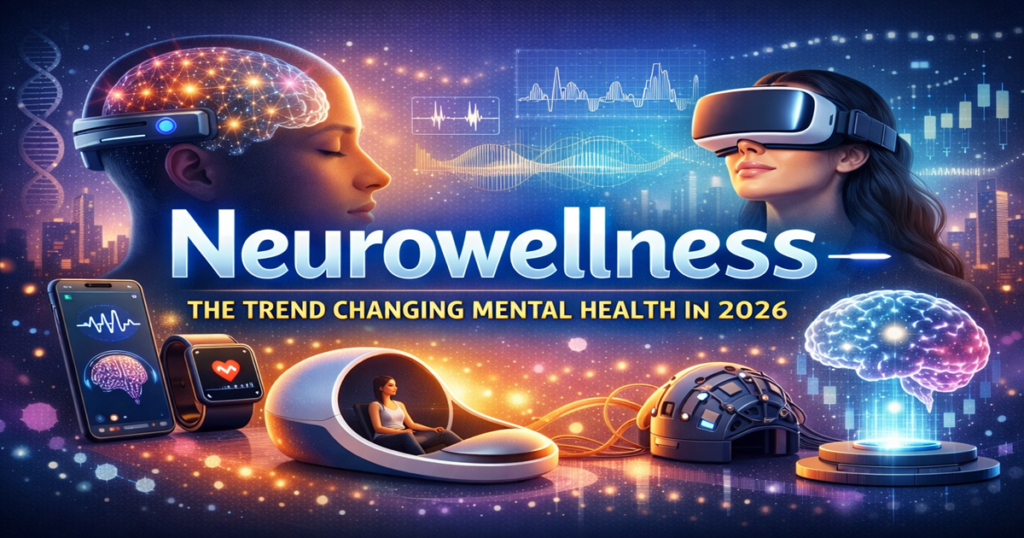
Your brain is tired. Not in the way sleep fixes. It is tired from five years of bad news, blurred work-life boundaries, and a phone that never switches off. You wake up exhausted. You feel anxious for no clear reason. Your focus breaks every ten minutes. This is not a personal failing. It is nervous system overload — and neurowellness is the 2026 health trend built to address it.
Neurowellness claimed the number one spot among 2026 wellness trends at the Global Wellness Summit on January 27. Moreover, the concept is simple: instead of waiting for a mental health crisis, you train your nervous system the way athletes train their muscles. Furthermore, the tools range from breathwork to portable EEG headbands to vagus nerve stimulators. As a result, millions of people are now tracking their nervous system the same way they track their steps.
What Is Neurowellness — and Why Now?
Neurowellness is the use of science, technology, and somatic practices to regulate the nervous system before breakdown occurs. It shifts care upstream. Instead of treating anxiety after it appears, neurowellness builds the capacity to handle stress before it becomes illness.
The nervous system has two modes. The sympathetic nervous system triggers fight-or-flight — heart rate up, digestion paused, stress hormones flowing. The parasympathetic nervous system triggers rest-and-digest — calm, recovery, repair. Modern life keeps most people stuck in sympathetic overdrive. Nonstop digital stimulation, artificial light, social media, and global uncertainty all push the nervous system into low-grade fight-or-flight. It never fully switches off.
Moreover, this chronic activation causes real damage. The Global Wellness Summit identified the consequences directly: poor sleep, anxiety, inflammation, hormonal imbalance, brain fog, weakened immunity, and accelerated aging. Furthermore, the term “neurowellness” itself only appeared in mainstream health conversations in late 2025. As a result, 2026 marks its jump from niche biohacking circles into gyms, spas, workplaces, and living rooms.
Why the Nervous System Is the New Frontier
Sleep Made the Problem Visible
Sleep tracking started this conversation. When wearables began giving people a daily sleep score, millions discovered theirs was poor. Moreover, poor sleep scores pointed to one root cause: an autonomic nervous system stuck in low-grade fight-or-flight mode overnight.
The Global Wellness Summit put it plainly: sleep has become the on-ramp to neurowellness. Furthermore, wearables turned a private struggle into a daily metric. When scores stayed low, the message became clear — the problem was not just sleep habits. It was nervous system regulation. As a result, millions of people moved from tracking sleep to trying to fix what caused poor sleep in the first place.
Burnout Is Now Measurable
Dr. Desiree R. Eakin, a specialist in integrative medicine and nervous system regulation, described the shift directly. She told Outside Online: “The most compelling trend in neurowellness is precision nervous system optimisation — the ability to objectively measure and retrain stress and resilience patterns in real time.”
Before neurowellness, burnout lived in self-reports. You felt terrible, but nothing showed up in standard tests. Now, heart rate variability, cortisol rhythms, and brainwave patterns make dysregulation visible. Moreover, Dr. Eakin added: “Historically, we assessed dysregulation through symptoms — anxiety, insomnia, irritability, burnout. Now we are quantifying it physiologically and neurologically.” Furthermore, that shift from guesswork to data drives the entire neurowellness market. As a result, burnout is no longer invisible. It shows up in numbers.
The Two Pillars: Hard-Care and Soft-Care Neurowellness
Neurowellness divides into two approaches. The Global Wellness Summit calls them hard-care and soft-care. Both aim at the same target — a regulated nervous system — but through very different tools.
Hard-Care: Consumer Neurotech
Hard-care neurowellness uses technology to directly measure and stimulate the nervous system. These tools have moved from clinical settings into consumer products at speed.
| Device / Tool | What It Does | Who Makes It | Evidence Level |
| Vagus nerve stimulators | Deliver mild electrical pulses to stimulate the vagus nerve — triggers parasympathetic response | Pulsetto, Sensate, Apollo Neuro | Growing — FDA cleared Flow device approved for depression |
| EEG-guided sleep tools | Track brainwave patterns during sleep — guide relaxation protocols | Elemind, Muse headband | Early but promising — small clinical trials |
| Neurofeedback platforms | Real-time brainwave feedback — train users to reach calm focus states | Myndlift, NeurOptimal | Moderate — used in clinical therapy for decades |
| HRV monitors | Measure heart rate variability — key indicator of vagal tone and nervous system health | Whoop, Garmin, Apple Watch | Strong — HRV is well-validated stress marker |
| Portable EEG headbands | Monitor brain activity during daily tasks — flag stress and focus patterns | InteraXon Muse, Neurosity | Early stage — consumer use ahead of clinical proof |
| AI sleep tracking wearables | Analyse sleep stages, body temp, hormonal rhythm — personalise recovery plans | Oura Ring, Eight Sleep | Strong for sleep tracking — AI personalisation newer |
Soft-Care: Proven Practices Reframed as Nervous System Medicine
The second pillar costs nothing. Breathwork, yoga, somatic therapy, touch therapy, and Feldenkrais movement — practices wellness has recommended for decades — now carry a new explanation. Scientists describe them as nervous system interventions with measurable physiological effects.
Moreover, slow diaphragmatic breathing directly stimulates the vagus nerve. It shifts the body from sympathetic to parasympathetic mode within minutes. Furthermore, somatic practices release stored tension patterns from the body — patterns that keep the nervous system in low-level alert. As a result, the Global Wellness Summit now classifies breathwork, yoga, and touch therapy as “nervous system medicine” — not just relaxation techniques.
The Vagus Nerve: The Body’s Stress Highway
Central to all of neurowellness is one anatomical structure: the vagus nerve. This long, branching nerve runs from the brainstem through the heart, lungs, and gut. It regulates heart rate, digestion, inflammation, mood, and stress response. It is the primary communication channel between the brain and the body.
High vagal tone — measured via heart rate variability — correlates with better stress recovery, lower anxiety risk, sharper cognition, and stronger immunity. Moreover, LifeX Research confirmed that vagus nerve stimulation through breathing, biofeedback, and dedicated devices effectively shifts the body from stress to calm. Furthermore, the vagus nerve is accessible. Deep breathing, cold water exposure, humming, and certain yoga poses all stimulate it without any device. As a result, vagal tone has become the primary metric of nervous system health in 2026.
Neurowellness in the Workplace
Employers have taken notice. In 2026, workplace neurowellness programmes are one of the fastest-growing segments of the corporate wellness market.
LifeX Research confirmed that employers now prioritise proactive strategies: mental health coaching, dedicated mental fitness days, enhanced employee assistance programmes, and resilience-building apps. Moreover, data shows this approach reduces burnout, boosts engagement, and improves long-term health outcomes. Furthermore, the concept of “mental fitness” — treating emotional and cognitive strength like physical fitness — has moved from HR buzzword to measurable business outcome. As a result, companies that invest in nervous system regulation report lower absenteeism, higher morale, and a competitive edge in talent retention.
What the Critics Say: Real Concerns Worth Knowing
Not everyone is enthusiastic. A significant body of clinical opinion urges caution — and the concerns are legitimate.
- Overclaiming is rampant: Many wearables and apps promise results the science does not yet support. Researchers warn that consumer neurowellness products are often marketed well ahead of peer-reviewed evidence. The gap between a device’s marketing and its clinical validation is frequently enormous.
- Fundamentals get ignored: Dr. Danielle Jones, a specialist in women’s hormonal health, notes that data from wearables must sit within a broader clinical context. Sleep, nutrition, exercise, and social connection remain the strongest interventions for nervous system health. No device replaces them.
- The optimisation trap: Obsessive self-tracking creates its own anxiety. Some users report that monitoring HRV and sleep scores daily makes them more stressed about their stress levels. The tool becomes the problem.
- Access inequality: Premium neurowellness tools cost hundreds or thousands of dollars. Critics ask whether these technologies improve lives across populations or merely serve people who are already health-optimised and wealthy.
What Actually Works: Evidence-Based Neurowellness Practices
| Practice | Mechanism | Evidence Strength | Cost |
| Slow diaphragmatic breathing | Directly stimulates vagus nerve — activates parasympathetic response within minutes | Strong — well-validated in clinical trials | Free |
| Consistent sleep hygiene | Reduces sympathetic activation overnight — lowers cortisol and inflammatory markers | Very strong — foundational to all nervous system health | Free |
| Regular moderate exercise | Reduces baseline cortisol, increases HRV, promotes neuroplasticity | Very strong — decades of peer-reviewed evidence | Low |
| Cold water exposure | Activates vagus nerve — builds tolerance to stress response | Moderate — growing research, not yet conclusive | Free |
| Mindfulness and meditation | Reduces amygdala reactivity — builds prefrontal cortex regulation of stress response | Strong — robust clinical evidence base | Free to low |
| HRV monitoring (as a guide) | Tracks nervous system state — helps users make lifestyle decisions based on recovery data | Moderate — HRV validated, AI interpretation less so | Medium — wearable required |
| Neurofeedback therapy | Trains brainwave self-regulation — clinical use for ADHD, anxiety, PTSD | Moderate to strong — decades of clinical use | High — requires trained practitioner |
| Vagus nerve stimulation devices | Electrically stimulate vagus nerve — research-backed for depression (Flow device) | Early but growing — FDA approval signals clinical momentum | High |
Neurowellness by Age Group: Who Needs It Most?
Nervous system dysregulation affects every age group — but it shows up differently.
- Gen Z (18-27): This generation grew up with smartphones from childhood. Chronic low-level fight-or-flight from social media, comparison culture, and digital overload is their baseline. Neurowellness tools targeting anxiety and focus dominate this demographic.
- Millennials (28-43): Career pressure, parenting, financial stress, and pandemic aftermath sit at the root of millennial nervous system dysregulation. HRV tracking, breathwork apps, and vagus nerve stimulators are the most popular entry points.
- Gen X (44-59): Burnout, perimenopause and menopause hormonal changes, and decades of unmanaged stress make this group increasingly receptive to neurowellness. Somatic therapy and structured breathwork lead the interventions.
- Boomers (60+): Cognitive resilience, sleep quality, and cardiovascular health drive engagement. EEG sleep tools and HRV monitors resonate. Community-based social wellness — confirmed as a strong protective factor — matters most for this age group.
The $10 Trillion Wellness Economy Behind the Trend
Neurowellness does not exist in a vacuum. It sits inside a wellness industry undergoing rapid transformation.
The Global Wellness Institute valued the wellness market at $6.8 trillion in 2024. The forecast puts it close to $10 trillion by 2029. Moreover, neurowellness represents one of its fastest-growing subsectors — driven by consumer demand for data, personalisation, and science-backed tools. Furthermore, BeautyMatter confirmed that the Global Wellness Summit’s 2026 trend report identified nervous system regulation, disaster preparedness, and microplastics reduction as the three forces most likely to reshape the global wellness economy this year. As a result, investment in neurowellness products, platforms, and services is accelerating across every sector from fitness to hospitality to real estate.
Conclusion
Neurowellness is not a gadget trend. It is a fundamental reframing of what health actually means. For decades, wellness focused on the body — diet, exercise, sleep. Mental health came second and sat separate. Neurowellness erases that boundary.
The nervous system drives everything: mood, cognition, immunity, hormones, aging, digestion, and sleep. Moreover, modern life attacks it constantly — through screens, news, noise, pressure, and disconnection. Furthermore, the 2026 neurowellness movement argues that regulating the nervous system is not self-indulgent. It is the foundation of every other health goal.
As a result, the most important health question of 2026 is not “how many steps did you walk today?” It is “what state is your nervous system in right now?” The answer — and the tools to improve it — are only getting more precise.
Frequently Asked Questions (FAQs)
Q1: What exactly is neurowellness?
Neurowellness is the practice of actively regulating the nervous system to build resilience before illness or breakdown occurs. It draws on neuroscience, behavioral science, somatic practices, and consumer technology. Moreover, it targets the autonomic nervous system — specifically the balance between the sympathetic fight-or-flight response and the parasympathetic rest-and-digest response. Furthermore, it claimed the top spot among 2026 wellness trends at the Global Wellness Summit on January 27. As a result, it is now one of the most widely discussed and fastest-growing concepts in health and wellness.
Q2: What causes nervous system dysregulation?
Chronic nervous system dysregulation stems from modern life’s constant demands on our attention and stress response. The primary drivers include nonstop digital stimulation, artificial light exposure at night, social media comparison, blurred work-life boundaries, poor sleep, processed foods, social isolation, and global uncertainty. Moreover, the Global Wellness Summit identified these as keeping most people in chronic low-grade fight-or-flight mode. Furthermore, this state produces real physiological damage over time — inflammation, hormonal disruption, brain fog, and accelerated aging. As a result, the problem is structural, not personal.
Q3: Which neurowellness practices have the strongest scientific backing?
The strongest evidence supports free, low-tech practices. Slow diaphragmatic breathing directly activates the vagus nerve and shifts the body into parasympathetic mode within minutes — this is very well-validated. Consistent sleep hygiene, regular moderate exercise, and mindfulness meditation all carry strong clinical evidence bases. Moreover, HRV monitoring is a well-validated stress metric when used as a lifestyle guide. Furthermore, neurofeedback therapy has decades of clinical use for anxiety, ADHD, and PTSD. As a result, the most evidence-backed neurowellness approach starts with free fundamentals — not expensive devices.
Q4: Are neurowellness devices like vagus nerve stimulators safe?
Most consumer vagus nerve stimulators use mild, non-invasive electrical pulses and carry a reasonable safety profile for healthy adults. Flow’s at-home neuromodulation device received FDA approval — a significant clinical credibility milestone. Moreover, wearables that measure HRV and sleep stages are non-invasive monitoring tools with no direct health risk. Furthermore, experts recommend consulting a healthcare provider before using neurostimulation devices, particularly for people with cardiac conditions, epilepsy, or implanted devices. As a result, most neurowellness tools are safe for healthy adults — but clinical guidance matters for anyone with pre-existing conditions.
Q5: How can I start with neurowellness without spending money?
Start with the fundamentals. Practice slow diaphragmatic breathing for five minutes each morning — inhale for four counts, hold for four, exhale for six. This directly stimulates the vagus nerve at no cost. Moreover, fix your sleep environment: block artificial light at night, keep a consistent wake time, and avoid screens for thirty minutes before bed. Furthermore, add ten minutes of moderate movement daily — even walking regulates the nervous system effectively. As a result, the most powerful neurowellness protocol costs nothing and requires only consistency. Devices and apps add value on top of these foundations — they do not replace them.