
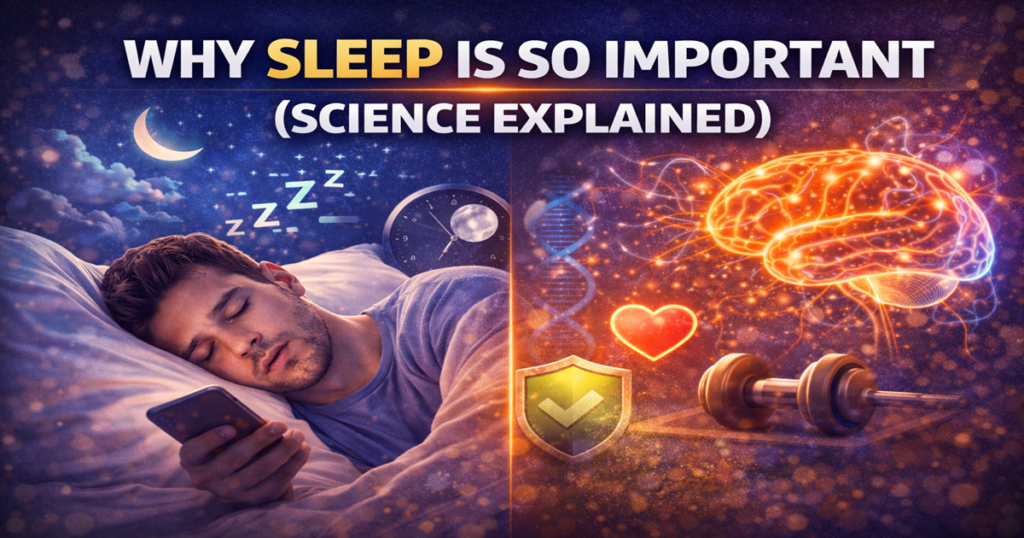
Why sleep is so important is a question science has answered with growing force and specificity. Sleep is not passive downtime. It is not the body simply powering off between productive hours. It is, according to the American Academy of Sleep Medicine, a biological necessity — one that actively maintains your brain, your heart, your immune system, and your mental health in ways nothing else can replicate. Furthermore, a landmark study published in SLEEP Advances in December 2025, analysing CDC data from all 3,143 US counties, found that insufficient sleep is the second strongest predictor of shorter life expectancy — surpassed only by smoking.
Sleep beats diet. Sleep beats exercise. Sleep even beats loneliness as a driver of how long you live. Yet more than 35% of US adults regularly get fewer than the recommended seven hours per night. The NHS reports similar figures for the UK. Therefore, understanding why sleep is so important — in concrete, biological terms — is one of the most valuable health investments you can make. This guide does exactly that.
Why Sleep Is So Important: The Evidence at a Glance
| What Sleep Does | What Happens Without It | Source |
| Clears brain toxins (glymphatic system) | Amyloid builds up; Alzheimer risk rises | Cleveland Clinic / NIH |
| Consolidates memory and learning | Working memory, focus, and recall decline | Harvard Sleep Medicine / Sage 2025 |
| Regulates immune cytokines | Immune suppression; 3x higher cold risk | Carnegie Mellon / PMC |
| Controls cortisol and blood pressure | Elevated BP; higher cardiovascular risk | PMC / AHA / CDC |
| Repairs cardiovascular tissue | Higher stroke, hypertension, and CHD risk | PMC umbrella review, 2025 |
| Balances hunger hormones (leptin/ghrelin) | Increased appetite; diabetes risk rises | Sage Journals umbrella review 2025 |
| Regulates mood and emotional processing | Anxiety, depression, and irritability increase | Frontiers in Behavioural Neuroscience |
| Predicts longevity — second only to smoking | Each county with more sleepers = longer lives | OHSU / SLEEP Advances, Dec 2025 |
| Maintains skin and tissue repair | Cortisol breaks collagen; visible ageing accelerates | Cleveland Clinic |
| Supports athletic and physical recovery | Muscle repair and hormone release impaired | Global Wellness Institute 2026 |
Why Sleep Is So Important: What Actually Happens While You Sleep
Most people think of sleep as a kind of off switch. The body lies still. The brain goes quiet. Nothing much happens until the alarm goes off. That picture is almost entirely wrong. Sleep is one of the most biologically active periods of the 24-hour cycle — and what the body accomplishes during those hours cannot happen any other way.
Sleep scientists at Harvard identify two primary biological functions that sleep performs: physiological restoration and memory consolidation. During the deeper stages of non-REM sleep, the body releases growth hormone, repairs damaged tissue, synthesises proteins, and restores energy reserves in muscle and organs. Furthermore, the cardiovascular system receives a critical rest: heart rate and blood pressure drop, giving the arteries and heart time to recover from the demands of the waking day.
However, the discovery that changed the scientific understanding of why sleep is so important came from research on the brain’s glymphatic system. The brain accumulates metabolic waste products during waking hours — including amyloid-beta and tau proteins, the same compounds found in the brains of Alzheimer’s patients. During sleep, particularly during deep slow-wave sleep, the glymphatic system activates and flushes these toxins out. Therefore, sleep is not merely rest for the brain. It is the brain’s nightly detoxification programme. Fail to complete it regularly, and those toxins accumulate. Cleveland Clinic neurologist Dr. Foldvary-Schaefer confirms: adults who regularly sleep six hours or less per night accumulate toxins that increase their risk of cognitive impairment and dementia.
“Sleep is an active process for every organ of the body, including the brain. We need sleep so we can restore nutrients, clear toxic materials and recharge for the next day.” — Dr. Nancy Foldvary-Schaefer, Cleveland Clinic
Sleep and the Brain: Memory, Attention, and Cognition
The brain’s relationship with sleep is among the most well-documented arguments for why sleep is so important. Sleep is not merely a time when the brain rests — it is a time when the brain actively processes, sorts, and consolidates the day’s experiences into lasting memory. Harvard Sleep Medicine’s research confirms this directly: sleep is vital for learning and memory, and insufficient sleep impairs both.
The mechanism is specific and understood. During NREM sleep, the hippocampus replays and transfers newly acquired information to the cortex for long-term storage. Springer Nature’s January 2026 sleep hygiene review documents that hippocampal replay during slow-wave sleep, combined with sleep spindle activity, directly improves memory consolidation and recognition accuracy. Moreover, REM sleep plays a complementary role — it reduces overall synaptic firing, pruning weaker connections and strengthening the ones that matter most. Together, these processes mean that a night’s sleep literally reorganises your brain to retain what you learned.
Sleep deprivation reverses this process at a measurable rate. A 2025 study from the University of South Florida found that college students averaging 5.8 hours of sleep per night showed measurable decreases in memory recall, focus, and emotional resilience. Furthermore, the Wikipedia summary of the sleep deprivation research literature confirms that just 24 hours without sleep causes significant decreases in attentional processing, increased reaction times, reduced cognitive flexibility, and disrupted task-switching. These are not minor inconveniences. They are functional impairments that affect every aspect of performance — at work, in education, and in daily life.
The long-term cognitive stakes are even higher. Chronic sleep deprivation is now one of the most consistently identified modifiable risk factors for Alzheimer’s disease and dementia. This is the glymphatic connection: every night of poor sleep is a night when amyloid-beta fails to clear properly. Therefore, poor sleep in your 30s, 40s, and 50s does not just affect how you feel tomorrow — it shapes the state of your brain decades from now.
Sleep and the Immune System: Your Body’s Night Shift
One of the most compelling scientific reasons why sleep is so important lies in its relationship with immunity. Sleep is not merely compatible with immune function — it actively drives it. During sleep, the body produces and releases cytokines: proteins that signal and coordinate immune responses against infection and inflammation. Therefore, cutting sleep short directly limits cytokine production and leaves the immune system operating at reduced capacity.
The PMC review published in Communications Biology confirms that sleep deprivation produces alterations in both innate and adaptive immune parameters, leading to a chronic inflammatory state and increased risk of infectious, inflammatory, cardiometabolic, neoplastic, autoimmune, and neurodegenerative diseases. Furthermore, research led by Professor Sheldon Cohen at Carnegie Mellon University found a stark practical consequence: people with poor sleep quality have significantly lower levels of T and B lymphocytes — the primary cells of immune function — and face approximately three times the risk of catching a cold compared to good sleepers.
The Sage Journals 2025 umbrella review of sleep deprivation’s effects across 29 systematic reviews and meta-analyses confirms the same pattern across multiple mechanisms. Sleep deprivation amplifies the production of inflammatory cytokines, drives systemic inflammation, and increases susceptibility to infectious and chronic disease. Moreover, it disrupts the adaptive immunity process through which the immune system learns and remembers pathogens — meaning poor sleep does not just leave you more vulnerable today but reduces the effectiveness of your immunological memory over time.
“Both the quantity and quality of sleep can influence cellular immunity, and even short-term sleep loss may weaken the immune system.” — PMC, Association Between Sleep Deprivation and Cardiovascular Disease Risk
Sleep and Heart Health: The Cardiovascular Connection
The heart never fully switches off — but sleep gives it the closest thing to genuine rest it gets. Blood pressure drops during healthy sleep. Heart rate slows. Arterial walls recover from the mechanical stress of daytime circulation. Furthermore, this nightly cardiovascular rest appears essential for long-term heart health in ways that are now well-established in clinical literature.
The American Heart Association and the CDC both recommend a minimum of seven hours of sleep per night specifically because the evidence linking short sleep to cardiovascular disease is substantial and consistent. The PMC umbrella review published in 2025, analysing 29 systematic reviews and meta-analyses, found that sleep deprivation is a significant risk factor for hypertension, stroke, and coronary heart disease. Short sleep elevates cortisol, increases sympathetic nervous system activity, raises blood pressure, and promotes endothelial dysfunction — the early cardiovascular damage that precedes clinical heart disease.
Moreover, the OHSU study published in SLEEP Advances in December 2025 demonstrated the cardiovascular consequence of insufficient sleep at a population level. Analysing CDC data across all 3,143 US counties from 2019 to 2025, the researchers found that counties with higher rates of sleep insufficiency had measurably lower life expectancy. Sleep predicted longevity more powerfully than diet, physical activity, or social isolation — with only smoking showing a stronger influence. Therefore, the question of why sleep is so important has a straightforward cardiovascular answer: inadequate sleep shortens lives, and the data is nationwide and definitive.
Sleep and Mental Health: The Emotional Brain at Night
There is a reason that everything feels harder after a bad night’s sleep. Decisions feel more difficult. Frustrations feel more overwhelming. Small problems feel catastrophic. This is not weakness — it is neuroscience. Sleep performs critical emotional regulation functions that the waking brain simply cannot replicate.
The Sage Journals 2025 umbrella review documented that sleep deprivation is a major cause of increased anxiety levels, emotional instability, aggression, mood disorders, and depressive states. Furthermore, the association between sleep deprivation and anxiety is consistent and proportional: the longer the sleep deprivation, the greater the anxiogenic effect. Elevated cortisol — which rises with poor sleep — combines with impaired prefrontal cortex function to produce a state in which the emotional brain fires more readily and the rational brain struggles to moderate it.
Walker and van der Helm’s landmark research on overnight emotional processing, published in Psychological Bulletin, demonstrates that REM sleep plays a specific role in detoxifying emotionally charged memories — replaying difficult experiences in a neurochemical environment low in norepinephrine (the stress chemical), which allows the brain to process and contextualise them without the full emotional charge they originally carried. Therefore, REM sleep is not just rest for the emotional brain. It is the brain’s overnight therapy session. Lose enough REM sleep, and emotional wounds stay fresh rather than healing.
The public health implications in both the UK and USA are serious. The NHS identifies poor sleep as a significant contributor to mental health problems including anxiety and depression. Multiple meta-analyses confirm that insomnia is one of the strongest predictors of new-onset depression. Moreover, Springer Nature’s 2026 sleep hygiene review found that structured sleep hygiene programmes reduce anxiety and depressive scale scores by an average of 38% — confirmation that addressing sleep addresses mental health simultaneously.
Sleep and Metabolism: Weight, Diabetes, and Hunger Hormones
Few people connect their sleep quality to their waistline. However, the biology is direct and well-evidenced. Sleep regulates the two hormones that control hunger: leptin, which signals fullness, and ghrelin, which signals hunger. Therefore, when sleep duration falls short, leptin levels drop and ghrelin levels rise simultaneously — leaving the body in a state of biologically driven hunger even when adequate calories have already been consumed.
The Sage Journals 2025 umbrella review confirms this mechanism comprehensively. Sleep deprivation is associated with suppressed leptin, elevated ghrelin, increased hunger, higher caloric intake (especially carbohydrates), reduced insulin sensitivity, and increased insulin resistance. Furthermore, the neurological dimension amplifies the problem: sleep-deprived brains show increased activity in reward regions when exposed to food stimuli, while decision-making regions show reduced activity. This means that poor sleep makes calorie-dense food more appealing and the ability to resist it weaker — a double hormonal and neurological blow to metabolic health.
As a result, chronic sleep deprivation is now independently associated with obesity and type 2 diabetes — not merely as a correlating factor but as a contributing mechanism. Moreover, the NHS and American Diabetes Association both identify sleep duration as a modifiable metabolic risk factor. Improving sleep quality, therefore, is a legitimate and evidence-based strategy for weight management and diabetes prevention that most people never hear about from their GP or doctor.
Short Sleep vs. Adequate Sleep: What the Body Experiences
| Body System | With Adequate Sleep (7-9 hrs) | With Short Sleep (<7 hrs) |
| Brain | Toxins cleared; memory consolidated; cognition sharp | Amyloid builds up; memory impaired; reaction times slower |
| Immune system | Cytokines produced; T-cells active; inflammation controlled | Cytokine reduction; inflammation rises; infection risk up 3x |
| Heart & circulation | BP drops; arteries recover; cortisol balanced | BP elevated; endothelial damage; CVD risk increases |
| Mental health | Emotional regulation restored; stress processed in REM | Anxiety, depression, and irritability rise proportionally |
| Metabolism | Leptin normal; insulin sensitivity maintained | Ghrelin rises; insulin resistance increases; obesity risk up |
| Skin & tissue | Growth hormone released; collagen maintained | Cortisol breaks down collagen; visible ageing accelerates |
| Longevity | Strong predictor of longer life expectancy | 2nd strongest predictor of shorter life (after smoking) |
| Athletic performance | Muscle repair; HGH released; reaction times sharp | Recovery impaired; strength and speed decline measurably |
How Much Sleep Do You Actually Need?
The recommended sleep duration varies by age, but the guidance from leading health bodies in the UK and USA is consistent for adults. The NHS, the American Academy of Sleep Medicine, and the CDC all recommend seven to nine hours of sleep per night for adults aged 18 to 64. Older adults aged 65 and above may require seven to eight hours, while teenagers need eight to ten hours and younger children progressively more.
These figures are not conservative estimates. They reflect the biological minimum at which the processes described in this guide — glymphatic clearing, immune cytokine production, emotional processing in REM, hormonal regulation — can be completed adequately. Furthermore, the OHSU research published in December 2025 adds an important population-level dimension: in every US state and across nearly all 3,143 counties studied, higher rates of insufficient sleep correlated directly with shorter average life expectancy. The threshold that defined insufficient sleep in this research was fewer than seven hours per night.
However, duration is not the only measure that matters. Sleep quality, timing, and regularity all contribute to how restorative sleep actually is. Springer Nature’s 2026 sleep hygiene review confirms that healthy sleep requires adequate duration, good quality, appropriate timing aligned with natural circadian rhythms, regularity, and the absence of sleep disorders. Therefore, someone sleeping in noisy, artificially lit conditions, on irregular schedules, or with untreated sleep apnea may still experience the effects of insufficient sleep despite spending the right number of hours in bed.
How to Improve Sleep Quality: Evidence-Based Strategies
Understanding why sleep is so important is the first step. Improving it is the second. The following strategies reflect the strongest evidence from clinical sleep research, NHS guidance, and expert consensus:
- Maintain a consistent sleep schedule. Going to bed and waking at the same time every day — including weekends — is the single most powerful regulator of the circadian rhythm. Furthermore, consistency reduces the time it takes to fall asleep and improves the proportion of time spent in deep, restorative sleep stages. The AASM identifies regularity as one of the five core components of healthy sleep alongside duration, quality, timing, and the absence of disorders.
- Reduce screen exposure before bedtime. Blue-wavelength light from screens — phones, tablets, computers, televisions — suppresses melatonin production and delays the sleep onset signal. Moreover, emotionally stimulating content from social media or news creates cognitive and physiological arousal that persists after the screen goes dark. Therefore, switching off screens at least 60 minutes before bed and charging phones outside the bedroom addresses both the hormonal and psychological dimensions of pre-sleep disruption.
- Keep the bedroom cool, dark, and quiet. Core body temperature must fall to initiate sleep. A bedroom temperature of 16 to 18 degrees Celsius (60 to 65 Fahrenheit) supports this process. Moreover, blackout curtains eliminate light that disrupts melatonin even at low intensity. NIEHS research confirms that environmental factors — light, noise, and temperature — are major modifiable determinants of sleep quality.
- Avoid caffeine after 2 PM. Caffeine works by blocking adenosine receptors — the same receptors that build sleep pressure throughout the day. Research shows that caffeine consumed up to six hours before bedtime reduces total sleep by approximately one hour and reduces sleep efficiency by 10%. Furthermore, caffeine reduces REM sleep by 20 to 40%, impairing emotional processing and memory consolidation.
- Exercise regularly, but not immediately before sleep. Consistent exercise is one of the most evidence-backed promoters of sleep quality, improving both deep sleep duration and overall sleep efficiency. However, vigorous exercise within two hours of bedtime can delay sleep onset by raising core body temperature and sympathetic nervous system activity. Morning or afternoon exercise produces the greatest sleep benefit.
- Limit alcohol. Alcohol is widely and incorrectly believed to aid sleep. It does accelerate sleep onset — but it disrupts sleep architecture, suppressing REM sleep and causing fragmented sleep in the second half of the night. Therefore, alcohol reduces sleep quality even when it appears to increase sleep quantity.
- Seek help for persistent sleep problems. If sleep difficulties persist despite good sleep hygiene practices, professional support is appropriate and effective. Cognitive Behavioural Therapy for Insomnia (CBT-I) is the first-line recommended treatment from both the NHS and American sleep specialists — more effective than medication for chronic insomnia, with lasting results. Furthermore, undiagnosed sleep disorders including sleep apnea affect millions of people in the UK and USA and are highly treatable once identified.
Frequently Asked Questions: Why Sleep Is So Important
Q1. Is it true that sleep is more important than diet and exercise?
According to the OHSU research published in SLEEP Advances in December 2025, sleep is a stronger predictor of life expectancy than diet, physical activity, or social isolation at the county level across the United States. Only smoking shows a stronger influence on longevity. However, these findings do not mean diet and exercise are unimportant. They confirm that most people underestimate sleep relative to these other health behaviours. Furthermore, sleep quality directly affects how effectively the body benefits from good nutrition and exercise — poor sleep impairs muscle recovery, disrupts metabolic hormones, and reduces the cognitive clarity needed to make healthy food choices. Therefore, sleep, diet, and exercise work as an integrated system, and neglecting any one undermines the others.
Q2. What happens to the brain during sleep?
The brain performs several essential functions during sleep that cannot occur when it is awake. During deep non-REM sleep, the glymphatic system activates and flushes amyloid-beta and tau proteins — the toxic waste products of neural activity that accumulate during waking hours and are associated with Alzheimer’s disease. Furthermore, the hippocampus replays newly acquired information and transfers it to the cortex for long-term storage, consolidating memory. During REM sleep, the brain reduces synaptic firing to prune weaker neural connections and strengthen important ones, while also processing emotionally charged memories in a low-stress neurochemical environment. Moreover, Springer Nature’s 2026 research confirms that sleep spindle activity during NREM sleep improves memory recognition and reduces false recall. Therefore, sleep is the brain’s nightly maintenance, learning consolidation, and emotional processing programme all in one.
Q3. How does poor sleep affect mental health?
The relationship between poor sleep and mental health is bidirectional, strong, and well-documented. Sleep deprivation is a major cause of increased anxiety levels, emotional instability, depression, and mood disorders. The Sage Journals 2025 umbrella review found that the anxiogenic effect of sleep deprivation increases proportionally with the duration of sleep loss. Furthermore, elevated cortisol from poor sleep impairs prefrontal cortex function — the brain’s rational moderator — while amplifying amygdala reactivity, producing heightened emotional responses to stressors that would otherwise be manageable. The NHS identifies sleep problems as both a symptom and a contributing cause of depression and anxiety. Moreover, CBT-I — designed specifically for sleep — demonstrates an average 38% reduction in anxiety and depressive scale scores, confirming that treating sleep directly improves mental health.
Q4. Why is REM sleep specifically important?
REM sleep — Rapid Eye Movement sleep — performs functions that no other sleep stage replicates. It is during REM that the brain consolidates procedural and emotional memories, processes experiences from an emotional distance, and performs what researchers describe as overnight therapy. Walker and van der Helm’s research in Psychological Bulletin demonstrates that REM sleep replays emotional experiences in a neurochemical environment low in norepinephrine, allowing the brain to process difficult events without the full emotional charge they originally carried. Therefore, REM sleep is essential for emotional resilience, creative problem-solving, and the regulation of mood. Furthermore, caffeine, alcohol, and sleep fragmentation disproportionately suppress REM sleep — which is why these factors damage mental health and emotional regulation even when they appear to affect total sleep relatively little.
Q5. How does sleep deprivation affect the immune system?
Sleep deprivation suppresses the immune system through several intersecting mechanisms. During sleep, the body produces cytokines — proteins that regulate immune responses against infection and inflammation. Therefore, cutting sleep short directly reduces cytokine production and impairs both innate and adaptive immunity. Research led by Professor Sheldon Cohen at Carnegie Mellon University found that people with poor sleep quality face approximately three times the risk of catching a cold compared to those with good sleep quality. Furthermore, the PMC Communications Biology review confirms that sleep deprivation leads to a chronic inflammatory state and increased susceptibility to infectious, cardiometabolic, autoimmune, and neurodegenerative diseases. Even short-term sleep restriction of one to two nights measurably alters immune cell populations and cytokine profiles in ways that persist into subsequent days.
Q6. How many hours of sleep do adults in the UK and USA actually need?
The NHS, the CDC, and the American Academy of Sleep Medicine all recommend seven to nine hours of sleep per night for adults aged 18 to 64. Adults aged 65 and over need seven to eight hours. These figures reflect the minimum required to complete the full biological functions of sleep — including glymphatic clearing, immune cytokine production, REM emotional processing, and hormonal regulation. Furthermore, the OHSU December 2025 research defined insufficient sleep as fewer than seven hours per night, and found this threshold associated with measurably lower life expectancy across nearly every US state and county studied. However, sleep need varies between individuals: some people function well at seven hours while others require nine. The key signal is daytime alertness — consistent daytime drowsiness or dependence on an alarm to wake suggests sleep duration is insufficient.
Q7. What is the best thing you can do to improve sleep quality?
The single most evidence-supported intervention for improving sleep quality is maintaining a consistent sleep and wake time every day — including weekends. This consistency anchors the circadian rhythm, regulates melatonin production, and progressively reduces the time needed to fall asleep while increasing the proportion of time spent in deep, restorative sleep stages. Furthermore, removing screens from the bedroom, reducing caffeine after mid-afternoon, keeping the room cool and dark, and avoiding alcohol all address the most common disruptions to sleep architecture. However, for people with persistent insomnia — difficulty falling or staying asleep most nights for more than three months — Cognitive Behavioural Therapy for Insomnia (CBT-I) is the gold-standard first-line treatment recommended by both the NHS and US sleep medicine specialists. It outperforms sleeping tablets in both short-term and long-term outcomes, and its benefits persist after treatment ends.
Conclusion: Why Sleep Is So Important — And Why You Should Prioritise It Starting Tonight
Why sleep is so important is no longer a philosophical question. It is a scientific one, and science has answered it thoroughly. Sleep clears the brain’s toxic waste. Sleep consolidates memory. Sleep regulates the immune system, repairs the heart, balances hunger hormones, processes emotions, and — according to the largest dataset ever assembled on the question — predicts how long you will live more powerfully than almost anything else you do.
The OHSU research across more than 3,000 US counties made the case with population-level force: communities that sleep better, live longer. The AASM’s position statement says it plainly: sleep is a biological necessity. Harvard’s sleep scientists confirm it. The NHS recommends it. The CDC measures it. Moreover, the consequences of ignoring it — chronic disease, shortened life, impaired brain health, weakened immunity, and deteriorating mental health — accumulate silently across years and decades before becoming impossible to ignore. Therefore, the most important thing you can do for your health tomorrow begins tonight. Not a new diet. Not a new fitness plan. A consistent bedtime, a dark room, and the understanding that the hours you spend asleep are not lost hours — they are the hours that make every other hour worth having.